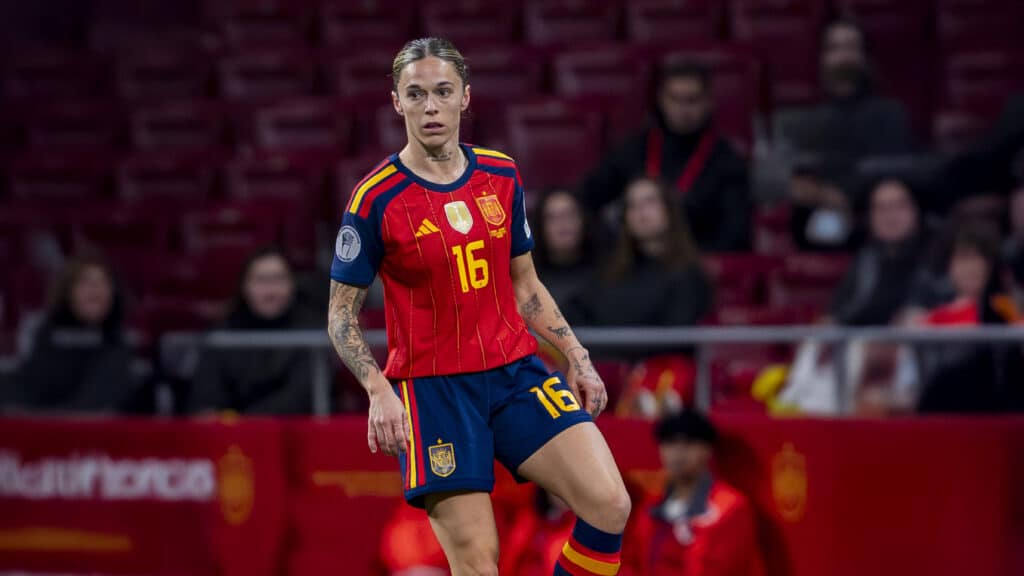
That was the first mission Reyes Bellver set for herself when she took charge of the women’s football department at the Spanish Football Federation (RFEF). Her goal was simple: make football the only story.
Until her arrival, almost everything surrounding the reigning world champions had been anything but sporting. Players had to fight battles both on and off the pitch. Those who paved the way found the doors of the Federation closed, while top-level players such as Mapi León openly questioned whether they would ever return to the national team.
As the last of Las 15 — the group of players who refused to be called up while demanding professional conditions — Mapi León’s return carried symbolic weight far beyond her talent as one of the world’s best centre-backs. She had made it clear she would only come back under specific circumstances. Her return was a statement: the war was over, and Spain’s players would finally have the conditions, resources, and respect of elite athletes.
Rebuilding Trust Through Dialogue and Patience
Making that possible was a careful, patient process. On an exclusive talk with The Rise of Women’s Football Bellver recalls her early conversations with Mapi: “At the beginning, when Montse Tomé was still in charge, I had some conversations with Mapi. One of my priorities upon arriving — in order to remove the noise and be able to build — was to have those pending conversations, to explain that there was a new president and new people leading the Federation. Explaining the direction we’re taking is important, and then you have to respect people’s decisions.”
She continues: “We had to approach it calmly, explain the changes that were being introduced within the Federation, the people now working here, and where we want to go. At the same time, you have to respect each person’s timing so they can feel comfortable about returning to the national team.”
The emphasis was always on trust. Later, with Sonia’s arrival as head coach, introductions and meetings helped normalize the relationship between players and management. “She held many meetings with players and handled the process very naturally. It was the result of collaborative, team-based work,” Bellver says.
Today, there is no player who does not want to join the national team — a clear signal that the culture around Spain’s women’s squad has shifted. Interview after interview, players echo the same message: “We only think about football now. We don’t waste energy on anything else but being footballers.” For Bellver, that sentiment represents the ultimate professional victory. “It’s not the Federation saying it — it’s the players themselves. They’ve been listened to, their needs have been considered, and now they can focus on their profession.”
Healing Past Wounds
Bellver’s vision also extended to the pioneers of the game, those who opened doors but were silenced by a system that punished players for speaking up. Vero Boquete’s reconciliation with the Federation became a symbolic turning point. During a match in Vigo, she met with the president Rafael Louzan and was presented with a national team shirt — a gesture that marked a new beginning. Public recognition, private conversations, and the ELEVA Award honored her as a trailblazer who “has broken every barrier” and embodies the spirit of women’s football.
Under Bellver’s leadership, the Federation now celebrates pioneers at every stadium it visits, acknowledges the clubs that led the way, and, most importantly, keeps its doors open to anyone who has something to say.
Changing the Federation from the Inside Out
Change internally has also reshaped Spain’s international presence. Bellver highlights the importance of communicating the Federation’s new direction to global institutions. “It’s very positive that major institutions understand this. There’s almost always another federation visiting us, and we take the opportunity to explain the project. Women’s football is now firmly part of the Federation’s core agenda — and that represents a real change.”
Through these efforts, Spain is positioning itself as a leader not only on the pitch, but in governance, visibility, and professional standards. Bellver’s goal is clear: to create a sustainable ecosystem where players, clubs, and federations work together to elevate the sport globally.
Author: Irati Vidal