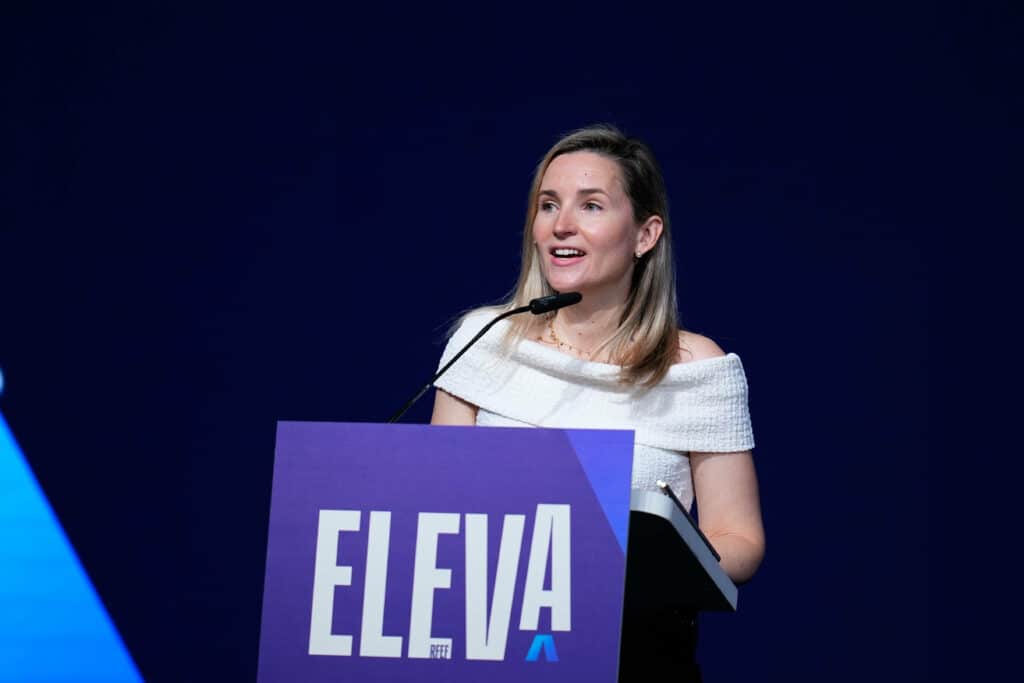
But that story began to change about a year ago. Today, they all echo the same message in every statement and press appearance: “Now, we only focus on football.” Behind that shift stands one person—a leader more than a culprit: Reyes Bellver. A lawyer specialized in sports law, she took on the role of Director of Women’s Football at the Spanish Football Federation a year ago, turning her desire for improvement into concrete action.
Since then, much has changed, while other challenges remain on the roadmap for reform. In an exclusive conversation with The Rise of Women’s Football, Bellver reflects on her first year in office and outlines the remaining obstacles for Spanish women’s football.
Q: You’ve just completed a year leading women’s football at the RFEF. How do you assess it?
Reyes Bellver: “February 1 marked one year, and it’s been intense. I think I’ve done almost everything I had in mind before coming in — or at least nearly everything. I’m happy.”
Before arriving, did you imagine you would be able to make all those changes?
“No. I thought I wouldn’t be able to do so much because a federation has its internal processes. Even so, I wanted to do more — I admit I’m very intense. When I like something and I’m passionate about it, I live it fully. I came in with many ideas.
The first month was the hardest. Then I started to understand that things are possible, but everything has a process. If you organize properly and have a plan, things can get done — sooner or later — but in an organized and structured way.
From the outside I knew the RFEF had resources, but I was positively surprised. Many more things are done than people realize. There are more people working and more departments involved in women’s football than it seems from the outside. When you arrive with a project and all those resources exist, that’s very positive. It surprised me in a good way.”
Why do you think these steps weren’t taken before?
“It has to do with the moment the Federation is in now — with a new president and new area directors. The work now follows a more proactive line. Everyone has their own way of working. Those who were here before did other things and maybe had a different strategy.
Now the working approach is different. Those of us who have come in have arrived with a very proactive plan. Maybe now there’s more specialization among professionals dedicated to each area. Always with full respect for what was done before, what I see is that this is a new stage with different people. The president sets a very proactive path where every day you have to leave a mark. That aligns with my way of working, and we’ve fit well.
We are a strong working group aligned with a new plan. Having developed a plan of action as a base makes it easier to achieve objectives, like filling the Metropolitano.”
What steps has the RFEF taken this year to further professionalize women’s football?
“First, we created the ELEVA Plan, our strategic plan for women’s football. We couldn’t work with a different idea every day; we needed foundations. ELEVA comes from wanting to raise the level — the name is intentional. Spain has huge women’s football talent, world champions and many references, but we can’t stay there. We need higher ambitions and to raise the level of the conversation around women’s football.
We must keep striving for sporting excellence, but there are other areas to work on too: competitions, commercial development, communication, visibility. We also need to work closely with regional federations, because each territory has different realities. Strengthening those territories makes football grow across Spain.
Leadership and giving women access in all areas is also part of the plan. We designed it this year and have started implementing it at grassroots level.
On the sporting side, we introduced María Pry as a key sporting figure to manage the national team structure. I’m a manager, not a sporting director, so we needed that profile to define ambition — where we want to go, what we want to project externally, and our relationships with UEFA, FIFA, and other federations. That’s also image.
We developed a sporting project with significant changes based on collaboration, from grassroots to elite, so all coaches can feed into a shared methodology with a Spanish identity.”
So how would you rate your first year overall?
“Very intense. But very satisfying because we’ve managed to get people talking about football again. That was one of the goals of this new stage because there had been a lot of off-field noise that didn’t allow us to build.
With the national team, it was clear: we had to eliminate the off-field noise and focus on building and working toward having the best team in the world. Everything else had to be in its place. That’s why we also spoke with pioneers and former players who previously didn’t have good relationships with the Federation — to try to close wounds and start talking about football again.”
Players themselves say they now only have to worry about playing football.
“That’s my greatest professional satisfaction. It’s not me or the Federation saying it — it’s the protagonists, the players. I know the effort we’ve made to ensure that, to work professionally and introduce the changes that were needed. But I also know because they’ve been asked, they’ve been listened to, and their needs have been taken into account so they can feel well and focus on their profession.
Now they’re saying it publicly because they want to, and that’s the clearest sign that we’re on the right path — that we’re in a new stage, even though there is still a lot left to do.”
That also ties into changing Spain’s image internationally.
“Yes, and we see it in every match when we exchange views with the national teams we compete against, and also in our work with FIFA and UEFA. I’m part of both women’s football committees, and that has allowed us to explain that we’re in a different dynamic now. I want them to know we have a new president, a new team, a different and very collaborative vision, with a defined project to follow.
It’s very positive that major institutions understand this. There’s almost always another federation visiting us, and we take the opportunity to explain the project. Women’s football is now firmly part of the Federation’s core agenda — and that represents a real change.”
Among those steps, you mentioned healing past wounds. One significant case was Vero Boquete.
“Yes. Starting with the match we played in Vigo, Vero came to the VIP box, met with the president, and he presented her with a national team shirt as a first gesture of rapprochement. From there, we began to see the importance of involving a reference figure like Vero.
We’re trying to close wounds with current players, former players, pioneers, and with the clubs that opened the path in women’s football and invested heavily in youth development but may not have received enough time or appreciation before. That recognition is important.
We gave Vero the ELEVA Award as a reference figure because she has broken every barrier, is still active, and truly embodies women’s football. With that award, the invitations, and the private conversations, we believe we’ve closed that chapter. The goal is for her to see the Federation as her home, like any footballer should.”
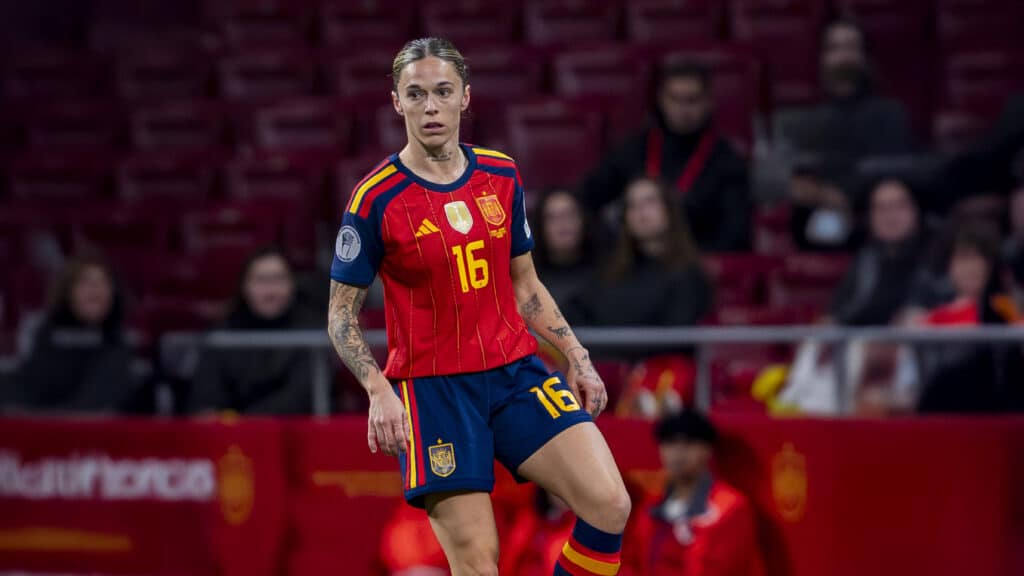
Then there are unresolved issues involving players who could still represent the national team, such as Mapi León. What did her return mean?
“It was another of the pending matters. We had to approach it calmly, explain the changes that were being introduced within the Federation, the people now working here, and where we want to go. At the same time, you have to respect each person’s timing so they can feel comfortable about returning to the national team.
Now we can say there is no player who does not want to come to the national team. All of them are selectable, and for me that’s the best thing we can offer our head coach. We had to resolve a situation that shouldn’t have existed — the fact that a talented player didn’t want to come. We want players to feel proud and happy when they are called up.
It’s important that they see we provide all the resources, because we want this to be the best national team in the world — and the best federation in the world as well.”
How did her return come about?
“At the beginning, when Montse Tomé was still in charge, I had some conversations with Mapi. One of my priorities upon arriving — in order to remove the noise and be able to build — was to have those pending conversations, to explain that there was a new president and new people leading the Federation. Explaining the direction we’re taking is important, and then you have to respect people’s decisions.
Later, with Sonia’s arrival, she herself has explained it: she introduced herself as head coach to most of the players so they knew she was the new manager. She held many meetings with players and handled the process very naturally. It was the result of collaborative, team-based work.”
From the outside, one of the highlights of the year was the Nations League final at the Metropolitano. How did you experience it?
“Hosting a final at a stadium like the Metropolitano is a privilege for us as a federation. It’s a magnificent venue, and we experienced it as a major challenge but also with great excitement. Above all, we wanted to show that when something is well planned, properly worked on, and backed by a strong team, success is possible.
There was excellent coordination between different departments, always with the goal of filling the stadium in a coherent way. We also worked closely with the regional federations so that it would be a celebration of Spanish women’s football, not just an event for Madrid or for existing followers of the women’s game.
We’ve been working to better understand our audience. We know women’s football attracts a younger, more family-oriented crowd, but the audience is still evolving, which gives us an opportunity to reach new fans. That’s why we focused on broad outreach and a restructured pricing policy with multiple promotions: first, we want people to come, see the product, and experience it.
The collaboration with regional federations and clubs was outstanding. We wanted the image of buses arriving in Madrid from all over the country, and the coordination made that possible. The kickoff time, parking arrangements, and overall organization worked very well. I think that day we gained much more than just a win—we showed that working seriously and as a team delivers results. All we ask is the space to work, talk about football, and build things with respect.”
You’ve pointed out that promotion is still one of the federation’s main challenges. How important is that area?
“Promotion is probably what had been missing most. I don’t like going to a city where people don’t even know the national team is playing there. There’s still a lot of work to do, and visibility depends on many factors, including the media, but we’re building a clearer project.
When we go to a city like Castellón, it’s important that people know the world and Nations League champions are playing there. That means more than just match day: being in the city the week before, organizing fan zones, promotional activities, and grassroots events.
We’ve also worked on strong visual campaigns and slogans such as “Where the stars come together.” In Málaga, for example, we linked football with art through Picasso. Connecting different worlds helps reach new audiences, generate conversation, and ensure the match is visible—on the street, on social media, and in the media.”
The Supercopa has also changed in recent years. This season, for example, it featured a proper final at Castalia, rather than players having to present the medals themselves. What does that change reflect?
“It reflects a shift in how the competition is understood and valued. The federation’s project is not limited to the senior national team. It is designed to run from grassroots football to the elite level, with a clear pathway for development and methodology.
Alongside the national teams, there are regional championships, youth competitions, the Copa, and the Supercopa. These tournaments had often gone unnoticed, and the aim now is to make the work behind them visible and to continue raising standards.
Every competition is part of the federation’s identity. If the Supercopa is not successful, it affects the institution’s image. That is something the federation takes very seriously. The objective is for all competitions to grow, both in sporting terms and in how they are presented.
Beyond the matches themselves, there is also a focus on improving organization, promotion, and visibility, always with a long-term perspective.”
There was talk of holding the Supercopa in the United States, but reports suggested that Real Madrid opposed the idea. Was that the case?
“Internationalizing competitions is one of the objectives of women’s football. The game is global, and staying domestic-only is not an option. The idea of taking the Supercopa to the United States was not driven by financial considerations. Other destinations could generate more revenue.
The United States is important because it offers a direct connection to the women’s football industry. Beyond economics, there are strategic benefits in terms of relationships, visibility, and international impact for clubs with women’s teams.
Any proposal is evaluated specifically through the lens of women’s football. When an opportunity could be positive, the federation has a responsibility to explore it. The industry is evolving rapidly, with increasing global investment, and Spanish women’s football must be part of that landscape.
Ultimately, no decision can move forward without the support of the clubs. They are the key stakeholders, and they must feel comfortable with any initiative, because they are the ones.”
Does taking the Women’s Supercopa abroad next season remain a viable option?
“It remains an option, as long as a clear project can be defined and all parties agree. The federation is working to present proposals that can fit everyone involved. The aim is to reach consensus, which is seen as essential in this new phase.
There is ongoing dialogue with clubs and with Liga F, and the priority is to move forward along a shared line. The federation’s role is to develop the best possible projects and put them on the table.”
Turning to Liga F, there has been speculation about Michel Kang’s interest in Spanish football. How do you view that possibility?
“Interest from investors in Spanish women’s football is always positive. It can strengthen the league and increase competitiveness. A club that currently has limited resources may gain new opportunities with external backing, which ultimately benefits the competition.
At this stage of the industry’s development, investment interest is a positive signal.”
Liga F operates independently from the federation, but are you concerned about the loss of talent to the Women’s Super League?
“Yes, it is a concern. The federation maintains a strong relationship with Liga F, with regular meetings and a coordination agreement, and both share the objective of consolidating a professional women’s league.
The outflow of players to England is worrying. There needs to be a more competitive league and higher attendances. Supporters who follow the national team should also be drawn to Liga F matches. Increasing the league’s visibility is key to attracting and retaining talent.
There are also structural issues. The league may be too long, which has consequences for the calendar. This affects players, clubs, and the national team, particularly in terms of workload. While coordination with clubs has improved to better protect players, the calendar will only become more demanding with the addition of new competitions.
A broader reflection is needed on the structure of women’s football and the league format in order to sustain long-term growth.”
Have you spoken with Beatriz to try to find a solution to Liga F’s situation, perhaps through a fairer financial fair play system that does not affect men’s clubs?
“Liga F knows that the federation’s hand is extended. The league itself has said on several occasions that when they come here, they feel at home, in the sense that everyone is focused on helping and working together so that women’s football can continue to grow.
In 2025, areas for improvement were identified. The situation was analysed, and in 2026 the focus has shifted to action. One example is the introduction of Football Video Support, a concrete step aimed at improving women’s football. Now may be the right time to take on new challenges, and Liga F has the federation’s full willingness to collaborate.
That is the approach being taken: all institutions working together. If something is good for women’s football, it should be pursued jointly. What has become clear is that progress cannot be made in isolation—not by the league, not by the federation, and not by individual clubs.
Building a competitive league requires clear planning and a shared vision of what women’s football should look like in five years’ time. Everyone involved needs to be aligned. The federation has an ambitious project, but it only works if all parties commit to that ambition.”
Finally, what challenges lie ahead for you as director of women’s football at the RFEF?
“The priority is to continue developing an ambitious sporting project. We cannot afford to lower standards. We are already looking ahead to the 2027 World Cup with a demanding project aimed at raising the competitive level even further.
There are also major challenges at youth level. Consolidating the grassroots base is essential. The goal is for every autonomous community in Spain to have a collaborative project in place, so that licences continue to grow and girls have more opportunities to develop at their own pace across all territories.
Another key challenge is visibility. Women’s football still needs to reach more places and continue expanding its audience.”
Do those challenges include hosting a World Cup or a European Championship in Spain?
“Hosting a major tournament is more of a dream at this stage. The deadlines to bid have already passed, so right now the focus is on sporting goals—winning the World Cup first. Once that is achieved, Spain can consider submitting a bid to host future tournaments.
We believe Spain would do very well as a host. The country has excellent professionals and world-class infrastructure. Being world champions strengthens our position, and when the opportunity arises, we will be ready to present a strong bid.
We’ve also seen in other countries, like Switzerland, that hosting major events helps grow the fanbase and attract more people to women’s football.”
Author: Irati Vidal