Women’s football has grown in visibility, commercial value and audience interest. Players now command larger stages, greater sponsorship opportunities and more attention than previous generations could have imagined. Still, the way women are presented and discussed alongside men can reveal how much work remains.
The Ballon d’Or ceremony is a useful example. It brings the men’s and women’s games together under one roof, offering an opportunity to celebrate football across the sport. That shared platform matters. So does the way it is used.
A ceremony can recognise women’s achievements while still treating their presence as secondary. It can celebrate their success while giving the impression that the men’s game remains the main event.
That contradiction was difficult to ignore on Monday night.
Michael Owen, his highlights and a missed opportunity
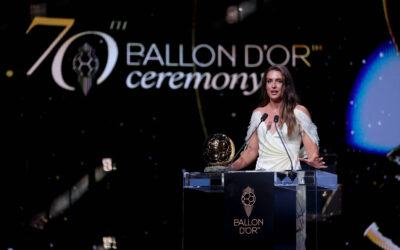
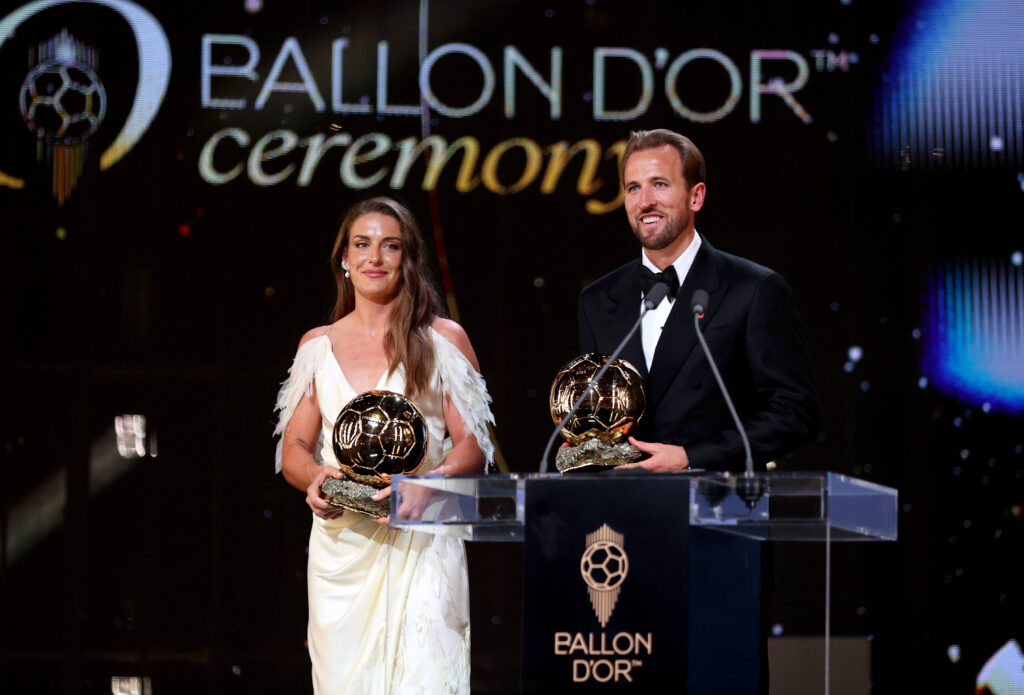
The choice of Michael Owen to present Alexia Putellas with the Ballon d’Or was not inherently a problem. Owen won the men’s award in 2001 and remains part of its history. The issue was the decision to feature highlights celebrating HIS Ballon d’Or-winning career immediately before the women’s award was presented.
At a ceremony meant to honour the best of football, the choice felt misplaced. Putellas was about to receive the sport’s highest individual recognition for women, yet the build-up turned attention back to a former men’s winner.
There was an opportunity to use that moment differently: to celebrate the history of the women’s award, the players who built its prestige, and the remarkable careers that have brought the women’s game to this point.
Instead, the staging risked reinforcing the very hierarchy the ceremony should be moving beyond.
This was not the first time the Ballon d’Or has attracted criticism over its treatment of women. In 2018, Martin Solveig asked Ada Hegerberg if she could twerk after she won the inaugural women’s award. The incident became a defining example of how a historic moment can be undermined by a needless and inappropriate interaction.
The details are different, but the broader lesson remains: the way women are treated at these events matters. It shapes how their achievements are presented and what audiences are encouraged to take seriously.
Women’s football has enough history and enough extraordinary players to stand on its own merits.
When Barcelona’s women won, Laporta talked about the men
The same tension appeared when FC Barcelona Femeni were named Women’s Club of the Year.
After he received the award, Thierry Henry asked Barcelona president Joan Laporta about the women’s team. Laporta moved the conversation towards the men’s side, discussing its ambitions and the pursuit of La Liga and the Champions League.
There is nothing wrong with discussing Barcelona’s men’s team. The problem was the context. The question was an opportunity to celebrate the women’s side after another season of remarkable success. Instead, the conversation drifted back towards the club’s men.
It was a small moment, but these moments accumulate. Women’s teams can win trophies, break records and produce world-class players, only for the attention to shift elsewhere before their achievements have had time to land.
Some responses to criticism argued that women’s football should have its own show or separate ceremony. Dedicated coverage can be valuable. Women’s football deserves platforms where its stories receive sustained attention, rather than being squeezed into limited spaces.
But that argument should not become an excuse for dismissing women in shared spaces. If a ceremony chooses to celebrate both the men’s and women’s games, both deserve meaningful attention. Asking for that is not asking for special treatment, it is asking for basic respect.
Barcelona’s women had earned their award. They deserved a conversation centred on what they achieved.
Text: Fleur Dias