One year later, that question is beginning to answer itself.
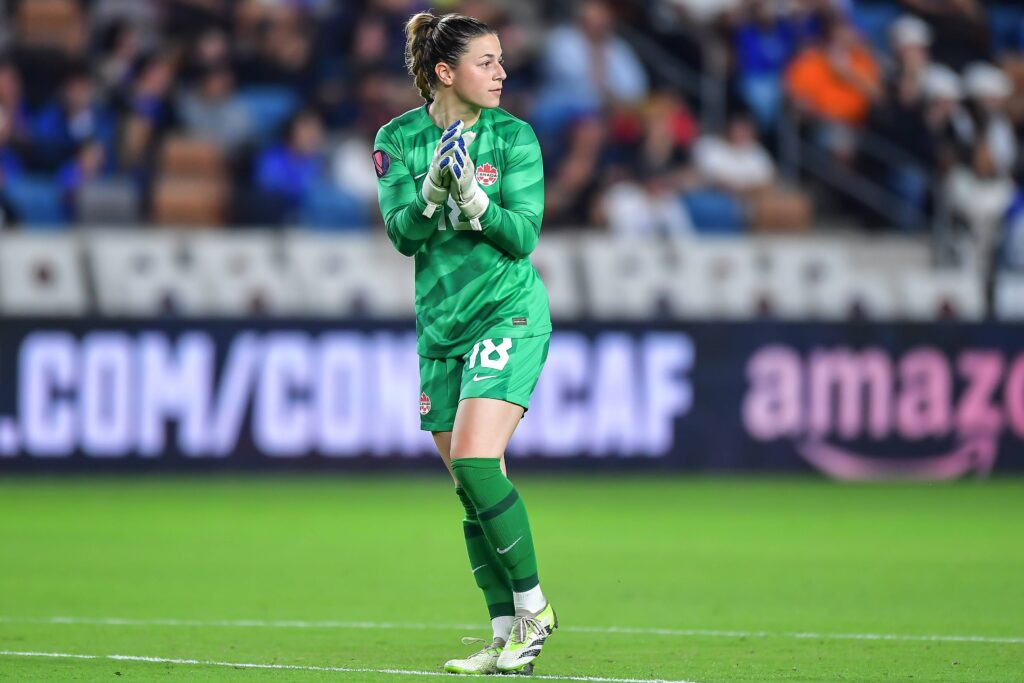
Within days of the league announcing a landmark investment from private equity firm APEX, three Canadian women’s national team players – Olympic gold medalist Shelina Zadorsky, veteran goalkeeper Sabrina D’Angelo and dynamic attacker Mimi Alidou – committed their futures to the NSL. Individually, each signing strengthens a roster. Together, they represent something much larger than three names on three team sheets.
They represent confidence.
Not just confidence in a league entering its second season, but confidence in a vision that, for the first time in Canadian football history, allows elite players to come home while they still have plenty left to give.
The return of Canadian internationals always felt like a matter of “when” rather than “if.”
For players like Shelina Zadorsky and Sabrina D’Angelo, the Northern Super League offers something they never had throughout most of their careers: the opportunity to play professionally at home. After years spent representing Canada across Europe, the United States and Australia, returning isn’t simply a football decision – it’s a chance to help build the ecosystem they once wished existed. For veteran internationals nearing the latter stages of their careers, it also presents a meaningful way to give back to the game that shaped them, passing on decades of experience while helping leave Canadian football stronger than they found it.
Those signings carry enormous emotional weight.
Ève Périsset’s doesn’t.
The French international has no hometown connection to the NSL. She isn’t returning to familiar surroundings or fulfilling a lifelong dream of playing professionally in Canada. Her decision is based almost entirely on football.
That changes the conversation.
Périsset arrives with one of the strongest résumés of any player to feature in the league. A French international with more than 60 senior caps, she has represented her country at multiple FIFA Women’s World Cups, UEFA Women’s EUROs and the Paris 2024 Olympic Games. At club level, she has played for some of Europe’s biggest names, including Olympique Lyonnais, Paris Saint-Germain and Chelsea, winning domestic league titles in France, England and Mexico while also lifting the UEFA Women’s Champions League with Lyon.

Her versatility is equally valuable. Naturally a full-back but comfortable on either side of the defence and capable of playing higher up the pitch, Périsset has built a reputation as one of Europe’s most technically reliable defenders. Throughout her career she has combined defensive intelligence with composure in possession, making her an ideal modern full-back capable of contributing in every phase of play.
But perhaps her greatest contribution won’t be measured in tackles won or assists recorded.
It will be measured in perception.
When a Canadian international signs with the NSL, the narrative is understandably centred on coming home. When an established French international, whose career has taken her through Lyon, Paris, Chelsea and Liga MX Femenil, chooses the same league without any national connection, it tells the rest of the football world that the NSL is becoming attractive on its own merits.
That is how leagues become destinations.
It also creates commercial value that extends beyond the pitch. International supporters who followed Périsset at Chelsea or with France now have another reason to watch NSL matches. European media are more likely to pay attention. Players across the continent begin asking questions about Canada, not as an emerging league, but as a legitimate option.
In many ways, this is the next stage of the league’s evolution.
The first phase was convincing Canadians that professional women’s football could thrive at home.
The second is convincing the rest of the world.
A League Entering Its Next Chapter
Launching a professional league is difficult. Sustaining one is even harder.
History is filled with ambitious leagues that enjoyed a promising first season before struggling to maintain momentum. Initial excitement fades, attendance levels off and questions surrounding long-term sustainability begin to emerge.
The NSL appears to be moving in the opposite direction.
Earlier this month, investment firm APEX announced a strategic stake in the league, committing an initial CAD $20 million with the potential to increase its investment to CAD $30 million. The deal, which values the league at approximately CAD $85 million, is expected to accelerate commercial growth, digital innovation, fan engagement and international expansion. It also came on the heels of a successful inaugural season in which the league attracted more than 275,000 fans, generated over CAD $30 million in revenue across league and club operations, secured 16 national commercial partners and reached millions of viewers through its broadcast partnerships.
For NSL President Christina Litz, however, the investment is about much more than immediate financial backing.
“Our ambition is to be one of the top leagues in the world, and ultimately one of the strongest professional sports leagues in Canada,” Litz said. “We’re already seeing incredible support, but we have to keep raising the bar. We want to see regular 10,000- and 15,000-person crowds, and we want to build a league that can stand alongside the best in the world. That will take time and significant investment, but if you don’t aim high from the beginning, you make decisions that undermine your potential.”
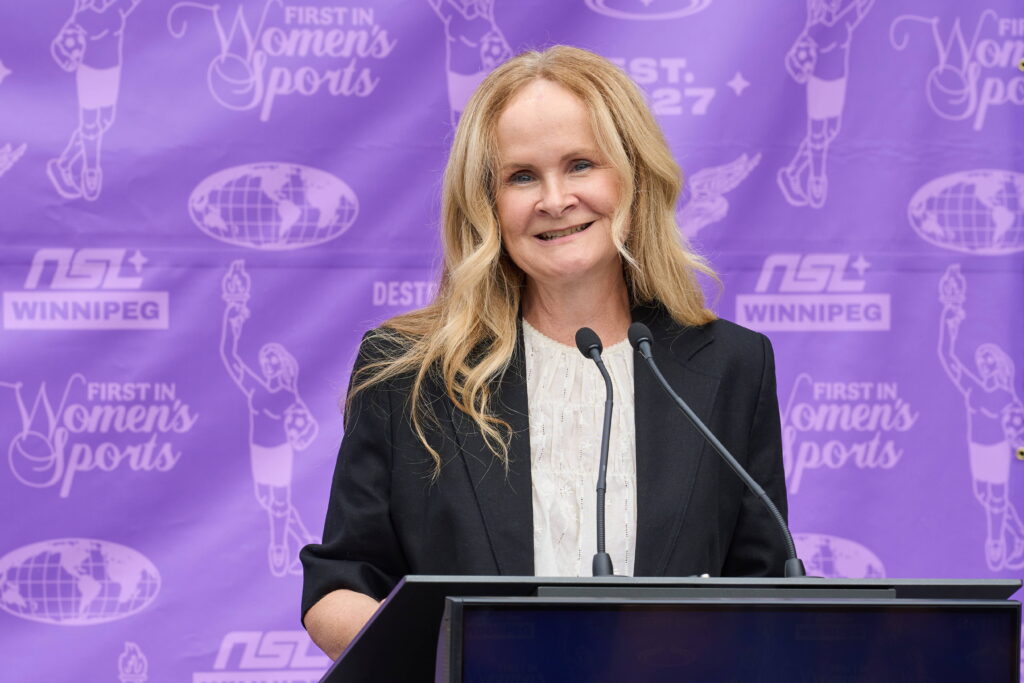
The APEX investment sends a clear signal that investors believe the league can reach those ambitions.
The numbers matter because they demonstrate something beyond financial success.
They show stability.
Professional athletes pay attention to more than salaries. They look at ownership groups, facilities, sponsorships, medical support, travel standards and long-term ambition. Players want to know whether a league will still be growing five years from now.
Yet money alone doesn’t build credibility.
Players do.
Why These Signings Feel Different
Shelina Zadorsky didn’t return because she had run out of options abroad.
The veteran defender has spent more than a decade competing across England, Sweden, Australia and the United States, establishing herself as one of Canada’s most respected defenders while helping the national team win Olympic gold in Tokyo. She could have continued overseas.
Instead, she chose AFC Toronto.
Sabrina D’Angelo’s story is remarkably similar. After years playing professionally in Sweden, Norway and England while becoming one of Canada’s most experienced goalkeepers, she is bringing that experience back to a domestic league that didn’t exist for most of her career.
Then there’s Mimi Alidou.
Unlike some veterans who return toward the latter stages of their careers, Alidou is still firmly in her prime, having accumulated 667 minutes with the NWSL’s Portland Thorns this season. Her decision suggests something equally important: the NSL isn’t becoming a retirement destination.
Litz believes attracting Canadian internationals is an important milestone, but not the only measure of success.
“Becoming a destination for Canadian internationals is still part of our journey,” she said. “We’ve learned that the decision to play somewhere is incredibly personal. Some players want to compete for a major club in Europe, while others value being close to family or helping build something at home. Our focus is on creating the strongest possible player experience, investing in infrastructure and building the support of passionate fans across Canada. We’re excited about where we’re heading, while also recognizing that our league can be a home for players from diverse backgrounds and national teams, reflecting the multiculturalism that makes Canada unique.”
A Pathway That Finally Makes Sense
Perhaps the most profound impact of these signings won’t be felt this season.
It will be felt in community clubs across Canada.
For decades, young Canadian footballers have followed a pathway with an obvious gap. They would progress through grassroots football, provincial programs, youth national teams and universities before reaching the same conclusion: if they wanted to play professionally, they had to leave.
That has long been the reality for Canada’s biggest stars.
Christine Sinclair built her legendary career in the United States. Jessie Fleming established herself in England. Vanessa Gilles found success in France. Jordyn Huitema headed to Europe before moving to the NWSL. Zadorsky and D’Angelo spent years building careers across multiple countries because there simply wasn’t a professional league at home.
The message, while unspoken, was clear.
Dream big. Then leave.
The NSL doesn’t eliminate overseas opportunities, nor should it. In fact, it might actually be a great launchpad for international careers as well. Holly Ward is a perfect example of that. After having spent the 2024 season with Burnaby FC in League1BC, the Vancouver native signed her first professional contract with the Vancouver Rise ahead of the NSL’s inaugural campaign.
What followed was a breakout season that transformed her career. Ward made history in the league’s opening match by drawing the penalty that led to the NSL’s first-ever goal before establishing herself as one of the competition’s brightest young stars. She scored her first professional goals with a brace against Halifax Tides, found the net in the playoff semifinals to help send Vancouver Rise to the inaugural championship match, and ultimately scored the title-winning goal in the league’s first-ever final.
Her performances didn’t just help Vancouver Rise lift the inaugural NSL trophy; they elevated her onto the international stage. Ward earned her first senior call-up to the Canadian women’s national team during the season, a testament to how the NSL had accelerated her development by providing consistent professional minutes in a high-performance environment.
That momentum quickly translated into the next step of her career. Just months after helping establish the NSL, Ward secured a transfer to the NWSL’s Seattle Reign FC on a two-year deal, demonstrating exactly what the league was designed to do: provide Canadian players with a professional platform to develop, earn national team opportunities and, when the time is right, compete at the highest levels of the global game.
Women’s football has become increasingly global, and many Canadian players will still pursue careers in Europe’s top leagues or the NWSL.
What it does offer, however, is something Canada has never had before: choice.
For the first time, a young girl can dream of playing professionally without imagining an airport departure gate as the next step.
She can watch Shelina Zadorsky marshal a defence in Toronto, see Sabrina D’Angelo command her penalty area, or watch Mimi Alidou attack defenders every weekend. Those aren’t just highlights on television during Olympic summers anymore. They’re players competing in stadiums she can actually visit.
That visibility matters.
Children don’t simply aspire to become professionals because someone tells them it’s possible. They believe it because they see it.
The distance between dream and reality suddenly feels much shorter when your heroes play in your own backyard.
Building More Than Better Teams
Returning national team players bring far more than name recognition.
They bring standards.
Young professionals entering the NSL now have daily opportunities to train alongside players who understand what it takes to compete in World Cups, Olympic tournaments and Europe’s biggest leagues. They have experienced different coaching philosophies, different tactical systems and the relentless demands of international football.
Those lessons cannot be taught in classrooms. For a league still establishing its identity, that influence may prove invaluable.
Expansion Is About Opportunity
The league’s growth isn’t stopping with player recruitment.
Earlier this year, the NSL confirmed it would expand to eight clubs, with Winnipeg becoming the newest market to join the league. For Litz, expansion has always been central to the league’s long-term vision.
“We committed from the beginning to getting to eight teams as quickly as we could, both to continue evolving the fan experience and to strengthen the competition across the country,” she said. “The investment from APEX and the confidence of our partners allowed us to reach that milestone earlier in our journey. And when Desiree Scott and Rob Gale said they wanted to be part of what we were building, we knew we had to capitalize on that opportunity. Seeing young girls in Winnipeg now able to envision a professional football career in their own backyard makes all the hard work worth it.”
Investment Creates Stability. Players Create Belief.
The timing of these signings is perhaps what makes them so significant.
The APEX investment validates the business side of the league. It tells sponsors, broadcasters and commercial partners that the NSL has long-term potential.
The arrival of Canada’s national team stars, on the other hand, validates the football side.
Together, they reinforce one another. Investors are more likely to support a league attracting elite players. Elite players are more likely to join a league backed by serious investment. Thus, momentum builds.
That’s how sustainable leagues are created. Out of a series of interconnected decisions that strengthen each other over time.
Coming Home Means Something Different Now
There was a time when Canadian internationals returned home only after retirement, often transitioning into coaching, broadcasting or administrative roles.
Now, they’re returning while they can still influence matches.
Players like Zadorsky, D’Angelo and Alidou aren’t simply looking back on distinguished careers. They’re choosing to help shape the next chapter of Canadian football while continuing to compete at an elite level.
Their legacy, therefore, extends beyond medals.
It becomes about building opportunities. Not just for young players but for anyone that wants to get their foot in the door when it comes to women’s football in Canada.
A Defining Moment for Canadian Football
It would be easy to view these signings as isolated stories. Three players. Three clubs. Three headlines.
But together, they tell a much bigger story.
They suggest that the Northern Super League is beginning to transition from an ambitious startup into a credible professional destination.
That matters not only for today’s players, but for the generations that follow.
One day, a young Canadian footballer may never have to ask where she needs to go to become a professional. The answer could simply be home.
The NSL is still young, and there will inevitably be challenges ahead. Every new league experiences growing pains. Success isn’t guaranteed by investment, nor by a handful of marquee signings.
But for perhaps the first time in Canadian women’s football history, financial confidence and footballing belief are arriving together.
Financial investment has given the NSL stability. Elite players are giving it credibility. Together, they’re helping build a league that no longer asks Canadians to look elsewhere to chase their dreams.
For Litz, though, success isn’t simply about attracting stars or expanding into new markets.
“Being uniquely Canadian is about more than having Canadian players on our rosters,” she said. “It’s about building elite pathways for Canadian talent while also embodying the qualities we associate with Canada: being inclusive, welcoming, strong but kind. We want to carry that identity with us wherever we play and wherever the league goes in the future.”
If the inaugural season proved professional women’s football could thrive in Canada, this next chapter is about proving a Canadian league can become one of the world’s best without losing the identity that made it worth building in the first place.
Text: Fleur Dias.