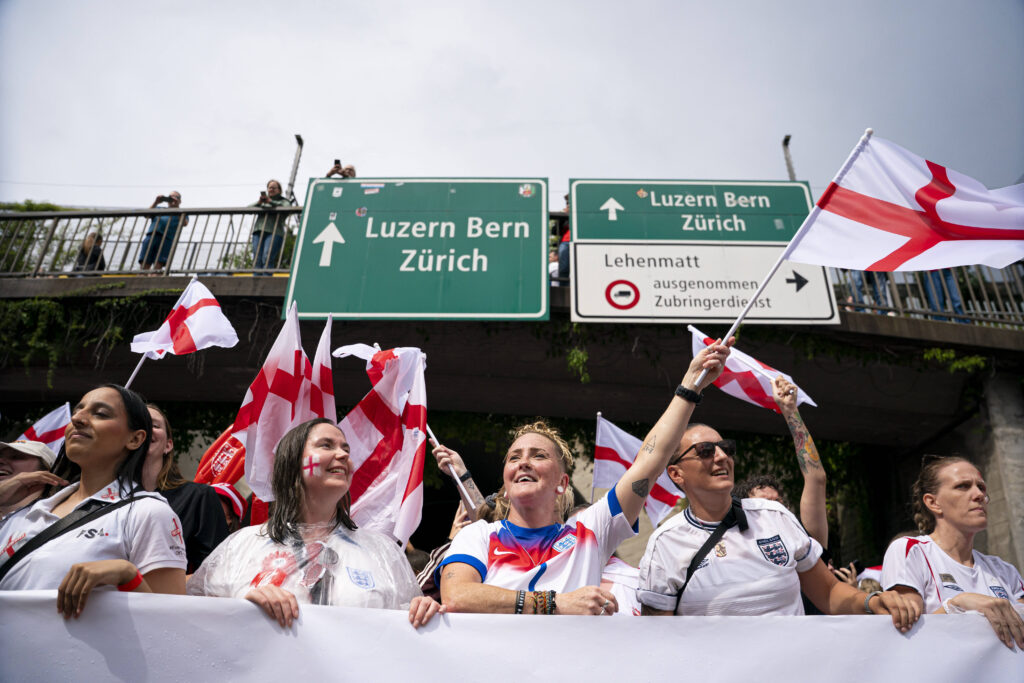
That second group is becoming increasingly important to women’s football. As the sport continues to grow, clubs are starting to realize that their value extends beyond what happens on the pitch. A successful team can give someone a reason to visit a city and discover a new place. The match might be what gets a fan on the plane but the city can turn that match into a full travel experience.
Football tourism has been a major part of the men’s game for decades. Cities like Manchester, Madrid and Barcelona have become destinations for supporters who want to experience their favourite clubs in person, and the stadium is often only one part of the trip.
Women’s football is now beginning to create some of those same habits, particularly as more clubs develop international followings and European competitions become more competitive. The difference is that the women’s game is still building this culture, which gives clubs and cities a chance to think about what they want women’s football tourism to look like rather than simply copying an existing model.
Switzerland showed what is possible
One of the clearest recent examples came during UEFA Women’s EURO 2025 in Switzerland. The tournament was hosted across eight cities and became the biggest Women’s EURO ever, attracting more than 657,000 spectators.
UEFA’s latest impact report, released in July 2026, found that the tournament generated 445,833 day trips and overnight stays and CHF 38 million in visitor spending from domestic and international visitors. Visa also reported that international arrivals to Switzerland increased by around 8% during the tournament compared with the same period the previous year, while visitors from participating countries spent 22% more than they had during the same period a year earlier.
What makes those numbers interesting is that the benefits weren’t limited to the stadiums. Supporters travelled between host cities, stayed in hotels, ate in restaurants, used public transport and visited local attractions while they were there. Some of the strongest increases were actually recorded in smaller host cities, with Visa reporting international arrival increases of 65% in Sion, 50% in Thun and 30% in St. Gallen during the opening week. For cities that don’t normally sit at the top of international tourism lists, hosting a major women’s football event created an opportunity to introduce themselves to visitors who may not otherwise have considered travelling there.
There is an important reality check, though. A 2026 academic study looking specifically at the tourism impact of Women’s EURO 2025 found that the effect on hotel stays was positive but relatively modest. Researchers found a 1.6% increase in hotel overnight stays at the main venues that could be attributed to the tournament. That doesn’t mean women’s football isn’t capable of driving tourism; it shows that putting a tournament in a city doesn’t automatically guarantee a huge tourism boom. Fans still need a reason to stay, and cities need to make it easy and enjoyable for them to do so.
The match can become the reason for the trip
Think about what happens when an international fan travels to London to watch Arsenal Women. The match might be the reason they book the flight, but it probably won’t be the only thing they do once they arrive. They could spend Friday exploring the city, attend the game on Saturday, grab dinner near the stadium and spend Sunday visiting museums or other attractions before heading home. From the club’s perspective, that supporter bought a ticket. From the city’s perspective, that same person became a tourist who booked accommodation, ate at local restaurants, travelled around the city and spent money at businesses that had nothing directly to do with football.
That is where the relationship between women’s football and tourism becomes interesting. Clubs can bring people into a city, while cities can give those supporters more reasons to stay. A club could work with hotels to create match-weekend packages, partner with restaurants near the stadium, promote local attractions to visiting supporters or work with a tourism board to create guides for international fans. None of this needs to take away from the football itself. In fact, it can make the match feel like a part of something bigger.
Arsenal is showing how powerful this can be
Arsenal Women have been one of the strongest examples of this shift in England. The club has increasingly moved women’s fixtures to the Emirates Stadium and treated them as major events rather than simply women’s versions of regular men’s matchdays. The strategy has helped Arsenal build some of the biggest crowds in women’s club football, with more than 35,000 spectators attending women’s matches at the Emirates during the 2025/26 season.
The significance of those crowds isn’t just the number of seats being filled. Arsenal has found that women’s matches can bring new people into the Emirates, including supporters who may not have previously attended a game there. Earlier audience research from the club showed that a large share of women’s match ticket buyers were first-time visitors to the stadium, suggesting that the women’s team can introduce new fans to both the club and the city around it.
That creates an interesting opportunity for London. The city already has millions of international visitors every year, but women’s football gives some of those people another reason to choose London, or another reason to add a football match to a trip they were already planning.
Players can become part of the tourism story too
The growth of international stars in women’s football adds another layer to this. Players can now have followings that stretch far beyond the countries where their clubs are based, and that means a transfer can create new connections between a city and an international fanbase.
London City Lionesses are an interesting example after bringing in high-profile players such as Alexia Putellas and Mapi León, both of whom already have large global followings from their time at Barcelona. León has spoken about the appeal of joining a club that was created specifically around women’s football, while the club itself has positioned London as an important part of its identity.
Those players don’t just bring talent. They bring audiences. A supporter who has followed Putellas for years might already have a reason to watch London City from another country, but seeing her play in person can turn that online connection into a real-world experience. A fan from Spain, for example, might travel to London because one of their favourite players is there, then stay for a weekend and experience the city at the same time. It is a small example of how player popularity can become part of destination marketing.
But the fan experience matters
Getting people to travel is only the first step. Once they arrive, clubs and cities have to give them a reason to want to return. That means thinking about the entire experience around the match, from how easy it is for an international supporter to get to the stadium to what they can do before and after the game. Fan zones, local restaurants, supporter events, affordable transport and information in different languages can all make a difference.
The 2025 UWCL Final in Lisbon showed how powerful that atmosphere can be. In the days around the final, the city was filled with Arsenal and Barcelona supporters from all over; wearing club colours and having conversations about women’s football. You could feel the excitement building across social media, broadcasts and fan content, even if you weren’t in Lisbon yourself.
Fans remember the score, but they also remember how a match (especially a historic final!) made them feel. Whether you were in the stadium, watching with friends or following along from another country, creating that sense of occasion can turn a single game into something people want to come back to.
The next step is making it intentional
For years, conversations about the growth of women’s football have focused heavily on attendance. How many people came through the gates? How many tickets were sold?
The next question should be different: where did those fans come from?
A crowd of 30,000 local supporters has a different economic impact from a crowd that includes thousands of people who have flown in from another country and booked hotels for the weekend. Clubs and tourism boards need to start understanding that difference. They can look at where international supporters live, how long they stay, what they spend money on and what makes them choose one football destination over another.
That information could shape everything from fixture scheduling to hotel partnerships and international marketing campaigns. If a club knows it has a large following in the United States, for example, it could work with tourism organizations to promote specific matches to American supporters. If a city knows a Champions League fixture is likely to attract fans from across Europe, it can prepare its hotels, restaurants and public spaces accordingly.
The sport has reached a point where those questions are worth asking.
The match gets you there. The city makes you stay.
Women’s football is no longer simply asking people to watch.
It is giving people reasons to travel.
The evidence is already there, from the hundreds of thousands of trips connected to Women’s EURO 2025 to Arsenal’s growing crowds at the Emirates and the international attention surrounding new competitions such as FIFA’s Women’s Champions Cup. The tourism impact will not be enormous every time, and clubs shouldn’t pretend that every fixture will bring thousands of international visitors. But the potential is real, especially when clubs, cities and tourism organizations work together rather than treating football as something that happens separately from the rest of the destination.
The biggest opportunity may be changing the way we think about a women’s football match in the first place. It isn’t just 90 minutes between two teams. For an international supporter, it can be a reason to book a flight, discover a new city, meet other fans, try a new restaurant and make memories that have very little to do with the final score.
The match gets you on the plane but the city gives you a reason to stay.
Text: Fleur Dias