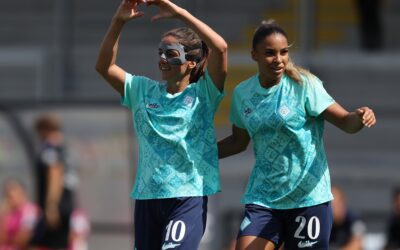
At the centre of that shift is the way women’s football audiences engage with the game. Supporters are not only watching matches; they are participating in a wider cultural space built around identity, aesthetics, and shared values. No club has embodied that transition more deliberately than Arsenal W.F.C.
Arsenal W.F.C. and the Rise of Lifestyle Branding
Arsenal’s collaborations rarely feel like isolated marketing activations. Instead, they tend to sit within a broader effort to define what the club represents culturally. Their bespoke women’s capsule with adidas, for example, was more than a kit release. It presented Arsenal Women as style leaders, not simply athletes wearing a repackaged version of the men’s design. The focus was on silhouette, lifestyle wear, and fashion credibility, signalling that women’s football could exist comfortably within the language of contemporary design and streetwear. Arsenal’s approach is not limited to fashion-led drops. Their partnership with Persil is one such example of the same.
On paper, Persil, a household detergent brand, feels fitting towards football. the usual “muddy kit” angle. Yet the collaboration was not built around product placement or surface-level branding. It was built around storytelling. The campaign focused on encouraging girls into sport, challenging gender stereotypes, and confronting the subtle social pressures that still discourage many young girls from participating in football.
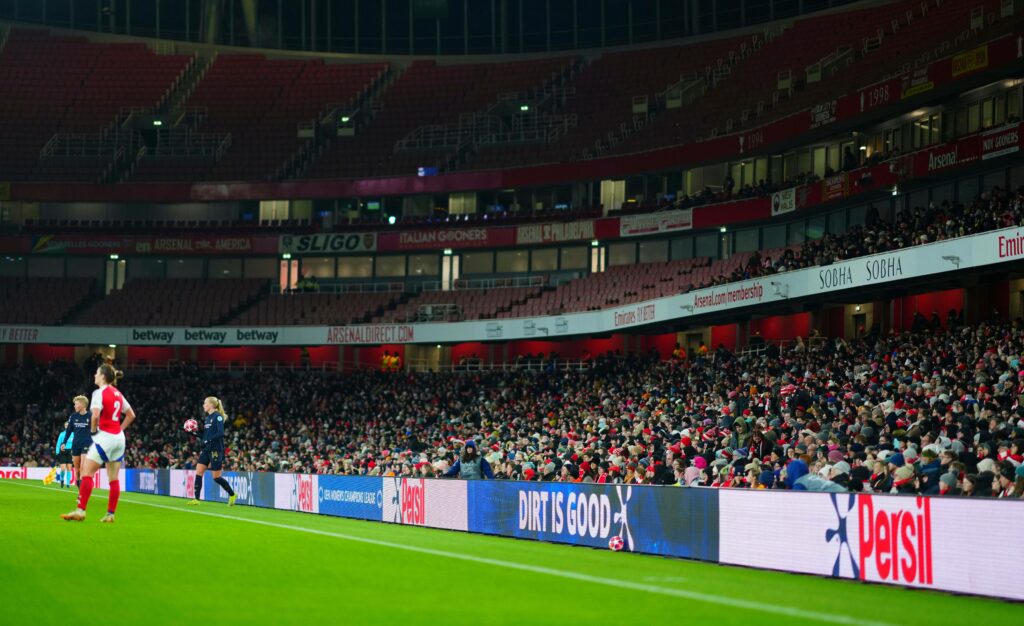
Rather than positioning Arsenal players purely as elite athletes, the campaign framed them as role models within a broader cultural conversation about confidence, visibility, and belonging in sport. Persil’s “Every Stain Should Be Part of the Game” messaging leaned into the physical reality of football, mud, contact, movement, reframing what is often used to police femininity in sport as something to be embraced instead.
Football Shirts as Cultural Artifacts
That shift is important because it captures what modern co-creation partnerships in women’s football are increasingly built on, alignment of values, not just alignment of logos. These collaborations work because they expand what fandom actually means. Being a supporter is no longer limited to buying a shirt or attending a match. It extends into participation in a wider cultural ecosystem shaped by music, fashion, activism, and identity.
That same can be seen in the rise of independent football fashion creators and players such Ottawa Rapid’s DB Pridham. The Canadian’s one-off, reconstructed pieces, often built from existing shirts and reworked sportswear, sit in direct contrast to mass-produced merchandise. Deliberately singular.
In many ways, they mirror the culture around women’s football itself: community-driven, expressive, and resistant to overly standardized commercialization. These pieces do not just reference football; they reinterpret it, treating shirts as objects of memory and identity rather than uniform commodities.
If Arsenal represents one end of the institutional spectrum, FC Barcelona’s partnership with Spotify represents the most expansive version of co-creation at the elite level.
Barcelona, SpotifY and the Power of Pop Culture
Rather than treating the shirt as static advertising space, Barcelona and Spotify have turned it into a rotating cultural canvas. Kits have featured ROSALÍA, Coldplay, Travis Scott, and Olivia Rodrigo, with each activation extending far beyond the pitch into playlists, capsule collections, social campaigns, concerts, and limited-edition merchandise.
What makes this model distinctive is not just the scale of the collaborations, but the way they treat football kits as cultural artifacts. They are no longer just identifiers of club allegiance; they are temporary expressions of wider cultural moments.
The inclusion of Olivia Rodrigo, in particular, reveals something more specific about where football’s commercial logic is heading. Historically, elite fixtures like El Clásico were defined by a very narrow cultural register: intensity, legacy, rivalry, and a distinctly masculine sporting mythology. The idea that a young female pop artist could be woven into the branding of one of the world’s most commercially powerful fixtures would once have felt unlikely.
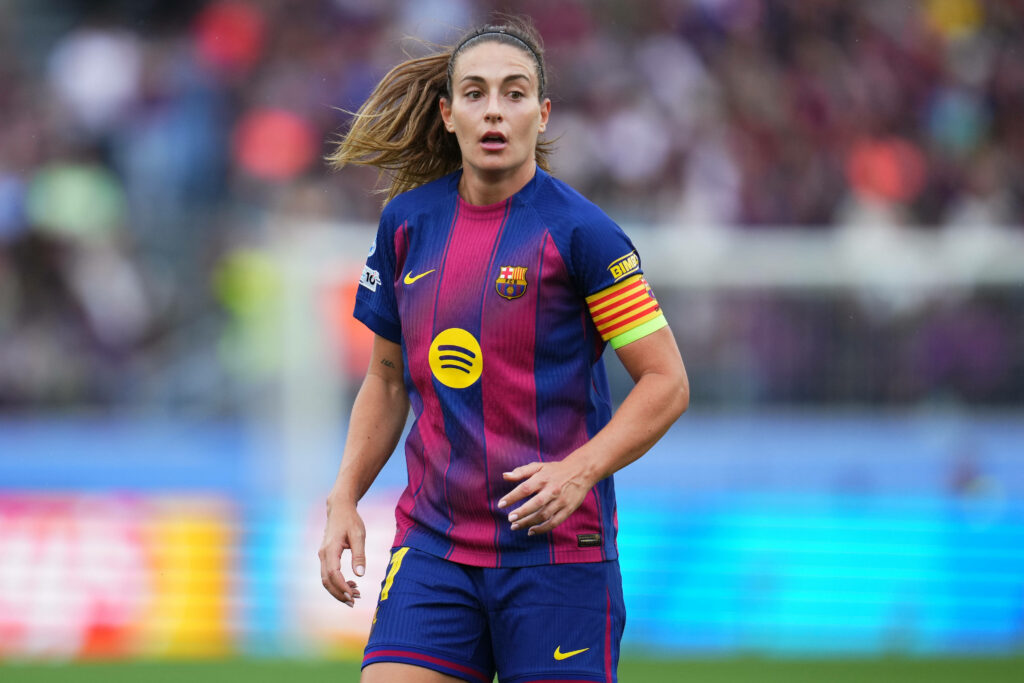
Barcelona and Spotify are operating within a different understanding of value. What Olivia Rodrigo brings is not just global reach, but access to a demographic that football has often struggled to speak to directly: young women and girls whose relationship with football is increasingly shaped through culture first, and sport second. Her presence on the shirt signals something subtle but significant. Femininity is no longer positioned as peripheral to football’s commercial identity. It is being recognized as part of its core cultural economy.
This is where the shift becomes more than marketing. It reflects how football understands its audience. Traits that were historically deemed as feminine are now central to how clubs build global relevance. In that sense, the Barcelona x Olivia Rodrigo collaboration is not just about cross-industry marketing. It reflects the extent to which football itself has changed. The game is no longer speaking to a single cultural archetype of fandom. It is speaking to multiple identities at once.
Independent Creators and the Reimagining of Football Fashion
Interestingly, many of these shifts did not originate in the men’s game. Women’s football has played a quiet but influential role in reshaping this branding language. Because it developed commercially in the social media era, it was forced early on to build connections through storytelling, aesthetics, and community engagement rather than inheriting global scale.
That influence is now beginning to flow back into the wider football ecosystem. The emotional intelligence and cultural fluency that became central to women’s football branding are increasingly visible in men’s club activations too. Alongside elite clubs, some of the most innovative co-creation models are emerging from smaller, community-driven teams.
Community, Activism and Identity in Women’s Football
In the United States, clubs like Cherry Bombs FC have used partnerships with organizations such as Planned Parenthood to integrate activism directly into their identity. These collaborations move beyond neutrality. They treat brand partnerships as extensions of community values rather than purely commercial arrangements.
That approach would still be difficult to imagine in much of the men’s game, where sponsorship is often kept deliberately detached from social or political identity. In women’s football, however, clubs are more readily understood as community institutions, spaces that exist within wider conversations around gender equity, bodily autonomy, and social justice.
For smaller clubs, especially, this creates a different kind of loyalty. Supporters are not only attached through results on the pitch, but through shared belief systems. The club becomes something closer to a cultural statement than a purely sporting entity.
Alongside this institutional shift, independent creators have become central to how women’s football culture is visually defined. Figures such as Diana Al Shammari, known as “The Football Gal,” sit at the intersection of football, femininity and digital media.
Her embroidered football shirts, combining floral detailing with traditional kits challenge the long-standing assumption that football aesthetics must lean one way. Towards hypermasculinity. Instead, they introduce softness, craft, and individuality into objects that have historically symbolised uniformity and intensity.
Her work does not dilute football culture; it expands it. By layering traditionally feminine design language onto football shirts, she reframes what those shirts can represent. Creators like Al Shammari are not operating outside the football ecosystem. Their influence is being absorbed back into it. Collaborations with major sportswear brands and custom pieces for elite players reflect how mainstream football institutions are increasingly recognising the cultural value of these reinterpretations.
Why Meaning Matters More Than Merchandise
This matters because women’s football has been one of the primary spaces where this kind of creativity was allowed to develop early. Traditional sponsorship is no longer the dominant language of football partnerships. A fashion capsule can create prestige without mass sales. A storytelling campaign can shift how a generation of players or even just consumers see themselves in sport. A partnership with a social organisation can deepen a club’s identity even if it narrows its commercial neutrality.
Off late, the most successful collaborations are those that understand a simple but powerful shift: supporters are not just buying products anymore. They are buying meaning. Women’s football is simply showing what happens when clubs are willing to build around that reality.
Text: Fleur Dias