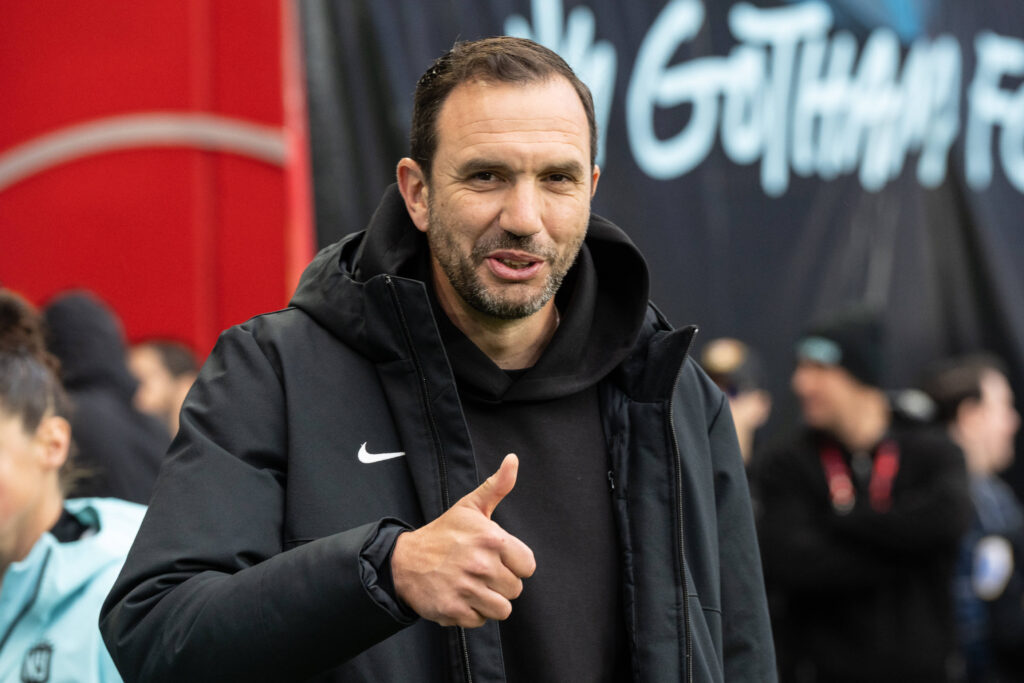
“I’m incredibly grateful to everyone at Gotham FC for supporting us unconditionally while we were deciding to take this step. This is a personal decision for our family, but I also recognize the visibility that comes with my role. When fathers take parental leave, particularly men in leadership positions, it helps normalize an important principle: Caring for children is a shared responsibility between parents. I need to be there for my family.” With these words, delivered after Gotham’s 3-2 win against Seattle Reign FC, head coach Juan Carlos Amorós publicly announced that he would step away from football for five weeks to take parental leave and support his partner in raising their two young children.
His decision sets an unprecedented benchmark for women’s football, as Amorós becomes the first man in the sport to take a substantial family‑related break, choosing to prioritize caregiving rather than leaving the burden entirely on his partner. There is only one comparable case in elite men’s sport: in 2023, Minnesota Vikings general manager Kwesi Adofo-Mensah took a two‑week paternity leave during NFL training camp. Although his club supported him, his choice sparked disbelief across the league, revealing how deeply rooted taboos around fatherhood remain in men’s sports.
Gotham FC, instead, has embraced Amorós’s decision. The club president of soccer operations Yael Averbuch West stated: “We are proud to be a club that recognizes that creating an equitable environment requires supporting all parents. We appreciate that Juan is using his platform to reinforce that message. We have great confidence in Shaun and our entire technical staff to continue leading the team during this period, and we look forward to welcoming Juan back in September.”
Parental Leave Is No Longer About Women Only
Generally speaking, parental leave has long been associated almost exclusively with women. They carry the baby for nine months and often take responsibility for the first steps and early months of a child’s life. This dynamic is reflected in the case of Tanya Oxtoby, who in 2021 became the first professional coach in England to take maternity leave after leaving Bristol City due to pregnancy. She later spoke openly about the difficulty of balancing a coaching career with family responsibilities. More recently, Jérémy Doku briefly left the men’s World Cup to attend the birth of his son. His decision was met with both congratulations and criticism.
Juan Carlos Amorós has set a new standard for professional sport and for men in general: he demonstrates that fathers can take several weeks away from competition to contribute meaningfully to the growth of their families. His decision also reopens the broader debate around paternity leave, currently guaranteed and paid in 85 countries for at least one week. Scandinavia continues to set the global benchmark with some of the most generous and progressive policies, while other regions are still developing their own frameworks and cultural approaches to parental leave.
Breaking the Fatherhood Taboo in Football
The case of Juan Carlos Amorós, as discussed, sets a new precedent for the football world and challenges long‑standing taboos around fatherhood and the management of childbirth, historically entrusted to women. In an environment defined by hyper‑competitiveness, where everything revolves around performance and results, the Gotham FC head coach has chosen to step away at the most crucial moment of the season. His team is fighting for the first Shield in its history, in a phase that could determine more favourable playoff matchups compared to 2025, when New York had to face the dominant Kansas City Current and the reigning champions Orlando Pride, winning both matches in dramatic fashion at the very last minute.
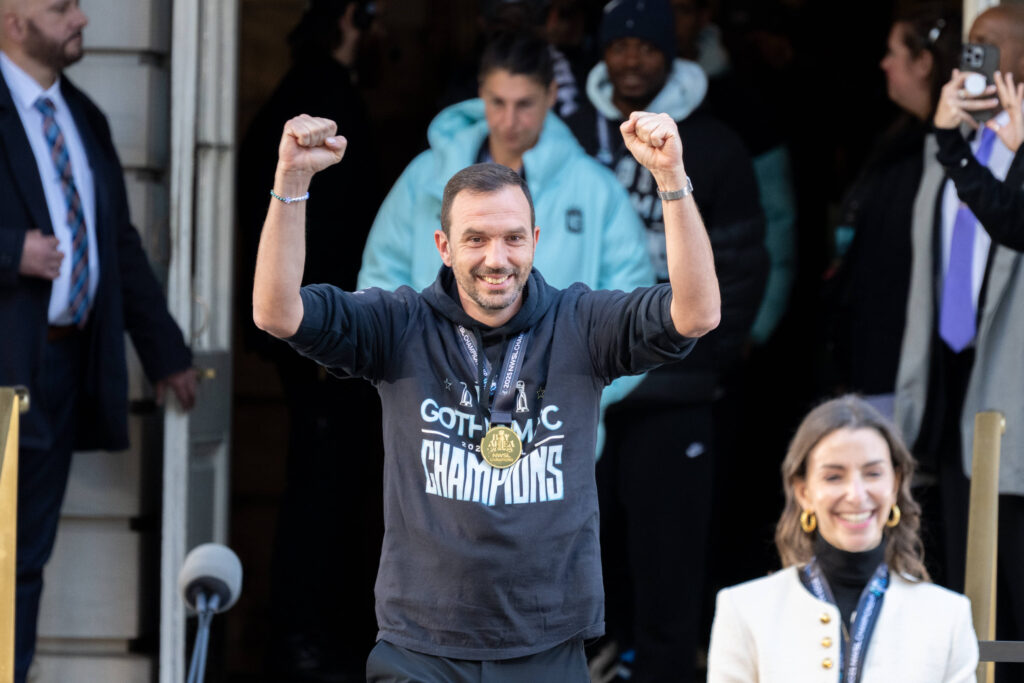
Documented cases of parental leave in sport have almost always involved extremely short absences: a temporary departure from the team camp, as in Jérémy Doku’s case at the World Cup, or a brief visit to the hospital in the hours before a match, as Sam Smzodics and Ben Gibson did in the past. Even in the longest examples, no one had ever gone beyond two weeks. With his decision, Amorós opens the door to new opportunities and new contractual expectations, because fatherhood is a right for players and for all men working in sport, and it cannot be treated as an exception.
Rethinking Fatherhood and Breaking Barriers
Of course, we are not naïve enough to believe that this gesture alone will dismantle decades of cultural taboos. The Gotham coach’s case is unique, but it must begin to evolve – if not the norm – at least into an option that more people feel empowered to take. A family works when both partners share responsibilities, and the burden should not fall solely on women.
Many taboos still need to be challenged in sport, both in the women’s game and especially in the men’s game, where those who show sensitivity toward issues beyond the pitch remain a minority. Not out of hostility, but out of a lack of awareness: fatherhood is one of these neglected themes. And these themes matter, because athletes are not detached from society; in fact, their influence can help shift public opinion and cultural expectations.
This is why figures like Juan Carlos Amorós, Borja Iglesias, and Rodri – to name just a few – are so important. Gestures like these help break down enormous cultural barriers and accelerate society’s progress toward greater equity and awareness. And when such gestures occur in contexts where taboos are even more deeply rooted, especially men’s football – while the women’s game has often shown greater sensitivity – then mountains can be moved, and ceilings can be shattered.
Text: Sebastiano Moretta