The coverage was sexist, condescending and nourished by the idea that women’s football was a new phenomenon, weird yet intriguing. As women’s football began to establish itself in the coming decades, that “news value” was lost and radio silence followed. Women’s football was dismissed as too niche or too unappealing to male audiences. This problem was more invisible than the blatant sexism of the 50s and 60s, but it hindered the progress of women’s football in a similar way.
Now, it would be easy to frame the relationship between women’s football and the media as a success story: From shaming to celebrating. The volume of articles written every year has increased steadily, in parallel to the attendance numbers. But the relationship between women’s football and the media has become almost too symbiotic, and critical analysis remains rare. What has changed over the last years, and what needs to change in the future?
Controlling the narrative: Clubs bypassing the media
Imagine someone spends years, even decades, insulting you or simply ignoring you. Then, once you become famous, they suddenly want to become friends to make money. Would you agree? Maybe not. Why rely on the reporting of the media, which has often proved to be sensationalist or even sexist in the past, if you could just produce your own content? This is a choice many clubs have made.
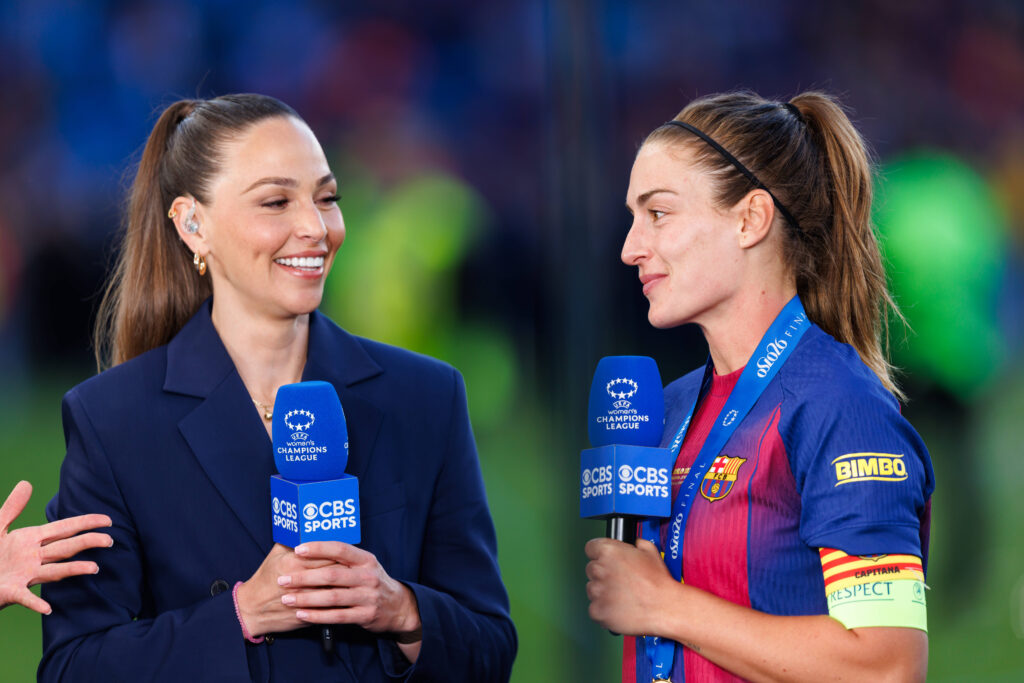
Through the rise of digital platforms and social media, the traditional media lost their position as gatekeepers of information. Now, clubs can bypass them easily to communicate directly with their fans. Clubs like Arsenal, Real Madrid, Barcelona Corinthians and Club América generate high engagement on their social media channels by inventing fun challenges but also sitting down with players to talk about serious questions.
The upside is that, by using shared posts with the men’s team’s account, they can reach fans who follow the club broadly, not just fans who specifically seek out women’s football. Clubs have a second advantage, which may be even more important: By asking the questions themselves, they avoid uncomfortable topics and negative headlines. But PR / access journalism and actual journalism are different things, and the women’s game has ended up with a lot more of the former.
Documentaries: A powerful tool, but clubs need to be more daring
One important trend clubs have followed is the production of documentaries. In women’s football like in other sports, the Formula 1 documentary “Drive to Survive” has served as a model for what a documentary can accomplish by creating emotional narratives, giving behind-the-scenes access, and showing the humans behind the athletes. Women’s football has had some good examples for these documentaries: Arsenal’s “Togetherness” series and their 2024/25 Champions League documentary “Only in the Land”, imitating the hugely successful “All or Nothing” series for the men’s team, recycled a lot of material fans had already seen, but also showed new, emotional moments. Lotte Wubben-Moy was shown after Arsenal’s Champions League win in 2025: „I felt so full in that moment that I wanted to burst. I was crying because you never know when that moment will ever come again. You actually don’t even think that moment is ever going to come.” If successful, documentaries still don’t qualify as journalism, but they help clubs to build a connection with their fans.
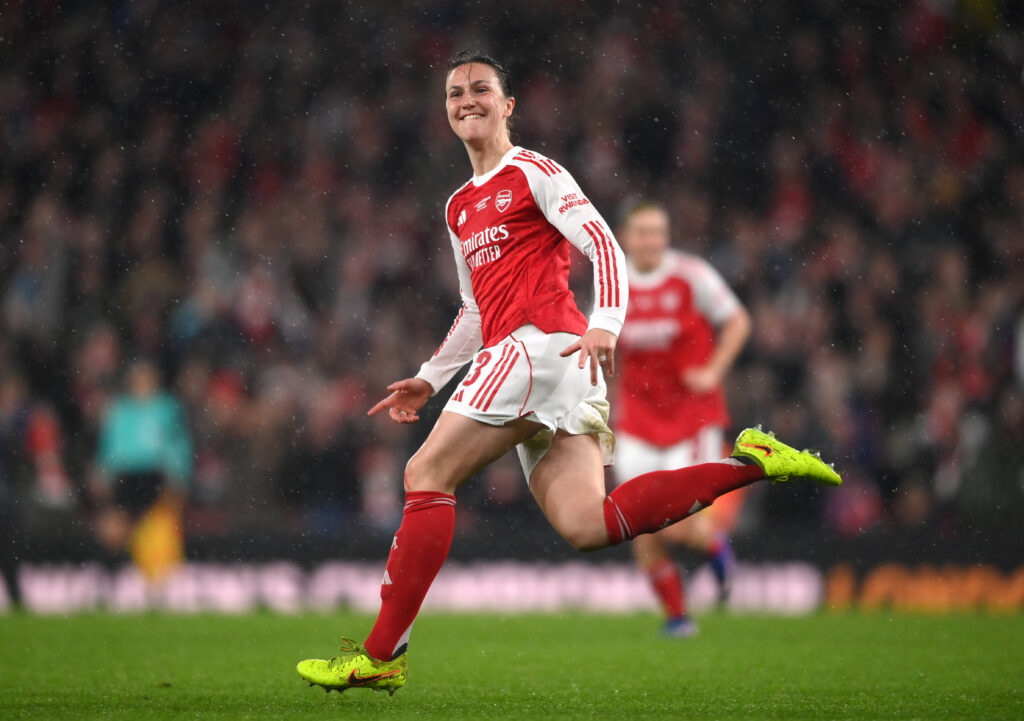
But too many productions feel sanitized. Controlling the narrative makes sense for clubs, but they have to expect fans to notice it – and to be bored by it. The world doesn’t need another documentary that just piles on changing-room scenes that reveal nothing, interviews with way too media-trained players and no real storyline. The DFB-backed documentary “Born for This” followed Germany’s Euros 2022 triumph and then the World Cup 2023 collapse without making it clear that the federation itself had paid for the films. They were instead sold as an independent look into the team. The line between marketing and journalism, here, almost vanishes.
More coverage, same old problems
If one only looks at the numbers, the development seems to be positive. Women’s sport accounts for around 15% of all sports media coverage now, up from about 3-5% in 2019, according to research from The Collective. This means the coverage has tripled in a very short span of time. Other sports like basketball or tennis also contributed to this shift, but it’s visible enough in women’s football too: Some years ago, just finding informations on who scored in a game in Italy’s Serie A or Germany’s Frauen-Bundesliga was very difficult. Now, at least basic coverage is established in most top leagues, and short match reports are produced.
Big tournaments are particularly effective for increases in coverage: The 2022 Euros in England were a game-changer. And in the region of Victoria in Australia, the 2023 Women’s World Cup on home soil produced a huge shift: three in four football stories in 2023/24 were about women’s football, compared to one in five before the tournament. But Australia also shows a good example for the misogyny that still prevails in some minds: radio presenter Marty Sheargold said in 2025 that he would “rather hammer a nail through” himself than watch women’s football. These sexist attitudes still exist, but at least they have consequences now: Sheargold was fired.
But progress is slow. A French TV commentator on TF1 chose to use the following words to describe how a player placed the ball on the penalty spot in a 2019 World Cup game: “With such delicate movements from such slender fingertips, it’s easy to see why some people would dream of being in the ball’s place…”
Growing pains: Superficial coverage and lack of critical distance
Many established outlets have discovered that the old claim that “nobody cares about women’s football” is far from true. Thus, transfer journalism, almost nonexistent in women’s football until recently, has been on the rise. Stories on the highest-profile transfers are generating upwards of 50 000 clicks, according to journalists, and even more engagement on social media. But that interest in women’s sports also attracted outlets that spotted an opportunity to generate clicks without any particular investment in the sport itself.
Jamie Spangher, an English freelance journalist, described a wave of “tokenism” when talking to the Sports Gazette: organizations jump onto women’s football coverage without caring about it, and produce gossipy pieces instead of real analysis. Then, they justify themselves by saying that this is what the audience is interested in, but as Spangher says: “If you feed the headlines, there’s gonna be a thirst for headlines.”
There’s a related pressure from within the fanbase. Jemele Hill, a basketball pundit covering the WNBA, has described how fans sometimes expect journalists covering women’s sports to function as cheerleaders and advocates rather than reporters: “They expect our jobs to be to support the women.” And indeed, some journalists do see themselves in that role. It’s easy to understand why: When the comment sections fill with misogynistic noise regularly, it’s understandable that some want to protect the women’s game from any sort of criticism. As a consequence, bad games get described as good fights and players, especially popular ones, aren’t scrutinized when they don’t perform at their usual level.
Leah Williamson said after the 2022 Euros that “the power is now with us when we ask for things.” She was right, and that shift is visible across how players use social media to build their personal brands, address issues like equal pay and LGBTQ visibility, and speak to traditional media entirely when it suits them. High-profile athletes don’t have to fight for media coverage anymore, rather the other way around.
The coverage of women’s football is better than it was five years ago, let alone seventy. But a mix of superficial coverage, hunting for clicks, and all too cosy coverage focusing on personal trajectories and feelgood stories, doesn’t equal critical journalism. It’s completely logical for journalists not to destroy their good relationship with sources who provide them with exclusive information, but that doesn’t mean it’s good for the sport.
This is not to say that critical, in-depth coverage doesn’t exist. Quite the opposite: Many outlets and individuals have shown how it’s possible to talk about women’s football in an engaging and nuanced way. So, for every bad example quoted here, a good one will be cited. The Guardian employs two journalists to cover women’s football full-time, and their newsletter “Moving the Goalposts” covers stories, good and bad ones, from across the globe and not just Europe and North America – something that is particularly missing in many outlets. The Athletic has also delivered groundbreaking coverage, including some very important coverage on the abuse scandal in the NWSL and, more recently, on motherhood in women’s football. “The Equalizer” is a website that solely focuses on women’s football – particularly in the US – and does it with fantastic tactical analysis and player profiles. More specialized women’s football outlets and new podcasts appear on the scene. This is the benchmark for great reporting in women’s football, and it’s both successful and sustainable.
Text: Helene Altgelt