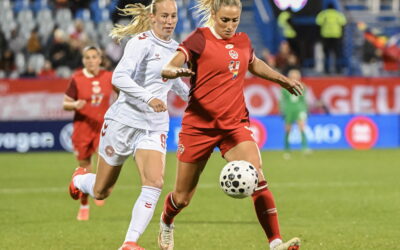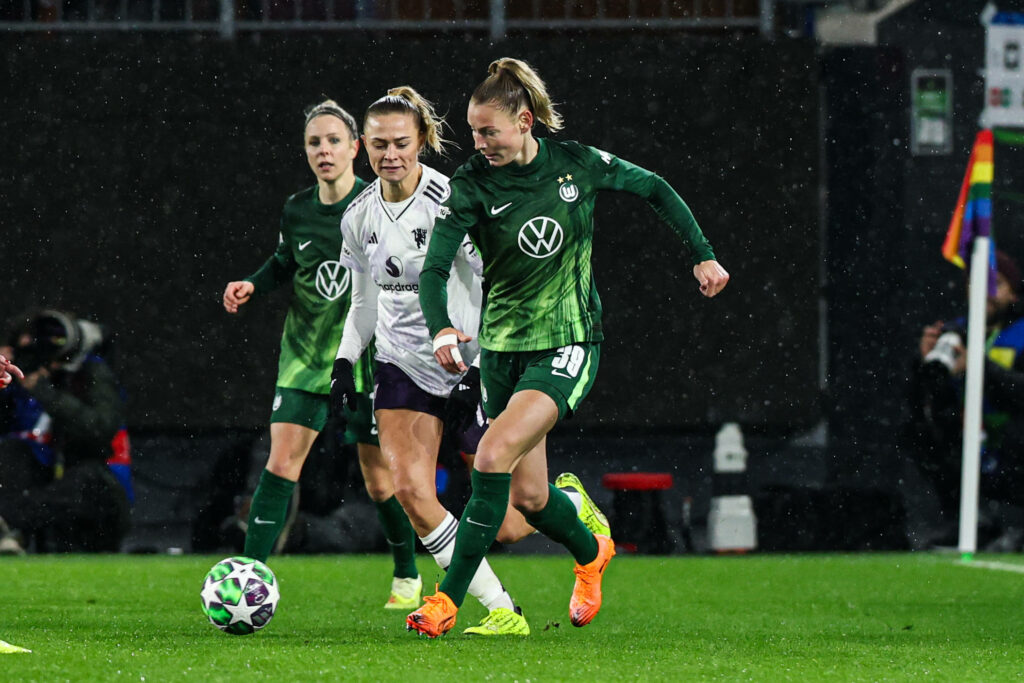
To Hartmann, this shift reflects broader changes in the global landscape of women’s football. Over the past decade, leagues in countries such as England and Spain have benefited from significant financial investment, often under different economic conditions. “Other leagues have invested heavily,” Hartmann notes, creating a level of competitive pressure that German football cannot ignore.
On the pitch, he says, Germany remains highly competitive. Clubs regularly reach the latter stages of the UEFA Women’s Champions League, and the national team continues to appear in major finals. Yet, as Hartmann points out, these achievements have not consistently translated into titles. “That is ultimately the benchmark if you want to speak about being at the very top,” he says.
The challenge, however, extends beyond sporting results. In modern football, international standing is also defined by factors such as attendance, media reach, infrastructure, and professionalization. In many of these areas, the Frauen-Bundesliga is “well positioned,” but not necessarily leading.
Attendance figures illustrate both progress and perspective. Before the pandemic, average crowds were below 1,000. Today, they have stabilized at more than 2,500 and are currently trending toward 3,500. While recent fluctuations have raised questions, Hartmann views them in context. “The overall trend remains positive,” he emphasizes, attributing minor declines to the varying number of high-profile matches that attract larger crowds.

Importantly, Germany has managed to sustain momentum generated by international success, particularly following the 2022 European Championship. “We managed to build on the euphoria… and not let it be a flash in the pan,” Hartmann says. Looking ahead, the 2029 European Championship on home soil is seen as a key opportunity to drive growth and visibility.
Fan culture also plays a role in international comparisons. Hartmann highlights a key difference between Germany and England: in the latter, supporters often identify with the club as a whole, rather than distinguishing between men’s and women’s teams. This cultural factor has implications for attendance, stadium usage, and long-term commercial development. To Hartmann, strategies like Union Berlin’s, using their stadium consistently for both teams, can help to grow this fan culture.
Other leagues implemented reforms faster at the end of the 2010s, leading to them overtaking Germany. Now, Hartmann insists that the DFB has proposed measures like a minimum wage to ensure professionalization. Whether these reforms can be ensured in the future, though, depends on the future of the league’s structure, as the discussions concerning a joint venture between the clubs and the DFB have stalled.
Author: Helene Altgelt