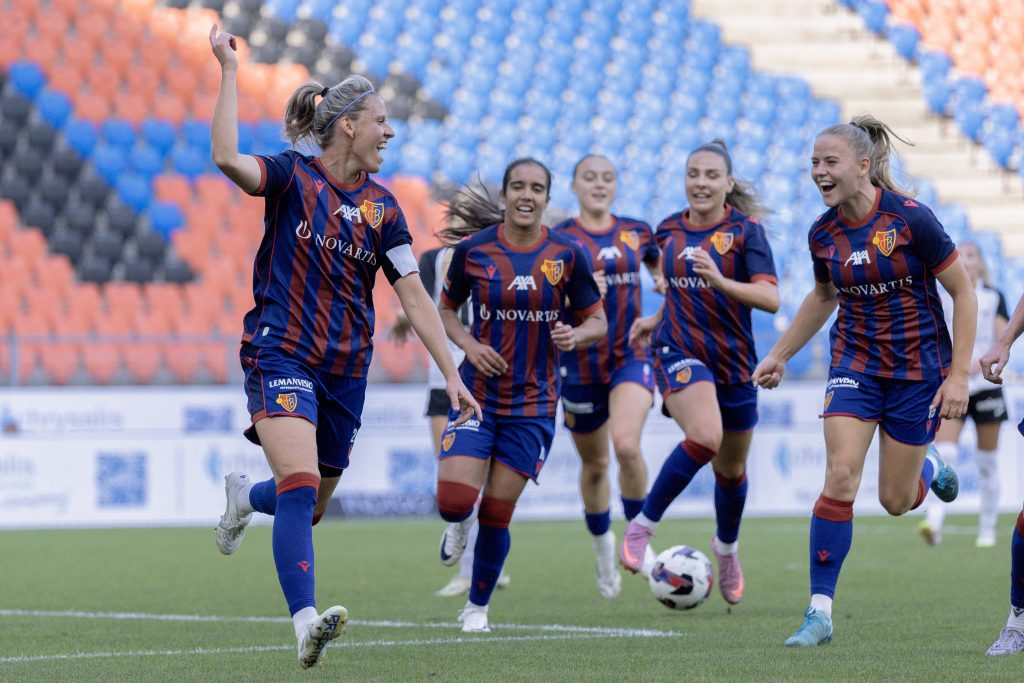
These Swiss women’s football reforms come at a time of rapid growth in the women’s game and are part of a broader effort to ensure equality and sustainability at all levels.
New Field Priorities for Women’s Football
A central element of the reform is the introduction of a new field allocation priority system within competition regulations, which changes how municipalities assign access to playing fields. Under the updated structure, the Women’s Super League (WSL) is upgraded to Priority 2, significantly improving access to training and match facilities. Other women’s competitions, including National League B and the 1st and 2nd divisions, also receive higher priority. In comparison, the men’s Super League remains at Priority 1, while the Challenge League is assigned Priority 3. This new system will take effect on 1 July 2026 and is designed to ensure comparable, modern development conditions for girls and women throughout Switzerland.
Part of UEFA’s “Here to Stay” Program
The reforms also support UEFA’s “Here to Stay” legacy program, which is linked to UEFA Women’s EURO 2025. This initiative focuses on creating equal opportunities for women’s and men’s football, building sustainable structures for professional and semi-professional clubs, and driving the long-term growth and visibility of the women’s game across Europe.
Licensing System Strengthens WSL Clubs
In addition to revised field priorities, the Swiss Football Association (SFV) is introducing a formal licensing system for the Women’s Super League. The system will be managed by the Swiss Football League (SFL) and will apply to clubs competing in the WSL as well as those participating in UEFA competitions for both women and men. From the 2026/27 season onward, clubs will be required to meet minimum standards in key areas such as organization, infrastructure, and sustainability. This step aligns the WSL with professional benchmarks already in place in men’s football and international UEFA competitions, including the UEFA Women’s Champions League.
Why These Reforms Matter
Together, the licensing framework and updated field priorities provide clearer regulations and greater stability for WSL clubs. They promote professionalism, support long-term development, and help create equal opportunities for girls and women in football, while also ensuring coordination with men’s leagues and media requirements. SFV President Peter Knäbel has emphasized that the reforms are designed to balance growth, equality, and fairness, while respecting the needs of the entire Swiss football ecosystem.
Conclusion
The Swiss women’s football reforms mark a major step toward professionalism, equality, and sustainability in Swiss football. By improving field access and introducing structured licensing, the SFV is creating a stronger foundation for the continued growth of women’s football at all levels.
This article was created with the assistance of AI and has been reviewed and edited by our editorial team.