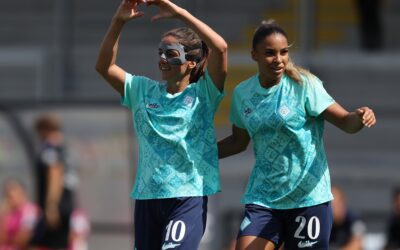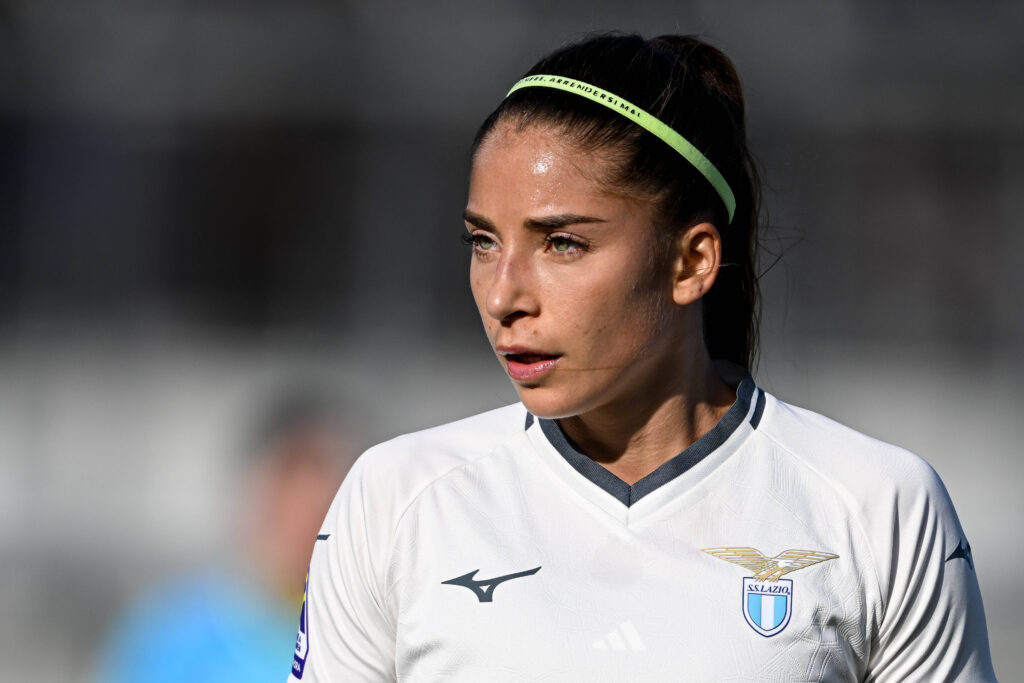
As previously discussed, women’s football in Italy is still in an embryonic stage, and the same applies to its sponsorship landscape. Rather than securing structured, long-term deals with major sports brands such as Adidas or Nike, most players rely on short-term social media collaborations. Many athletes are trying to make the leap from being simply players to becoming recognisable public figures. Yet they have not fully developed a stable model to turn themselves into personal brands or entrepreneurs. In recent months, however, things have begun to shift. There is a growing awareness of the economic value of personal branding, and conditions are emerging for low-cost, high-return investments, especially for companies looking to enter a rapidly expanding sector.
How Sponsorships Work in Italian Women’s Football
In Italy, there is still a lack of structured data indicating which players have ongoing partnerships with brands and what the economic value of those agreements is. For many athletes, sponsorships serve more as a way to supplement their football salary than as a significant additional source of income in a system that remains economically fragile.
The most common collaborations involve car manufacturers (for social content or event appearances), skincare and beauty products, nutritional supplements, and healthy food brands. One of the most active athletes in this space is Eleonora Goldoni, who has built a personal image on social media that extends beyond her on-field performance, making her an interesting case study for the Italian market.
Compared to other countries, Italy still lacks major sportswear endorsements. Italian players likely need to combine on-field achievements with a more structured personal branding strategy in order to increase their market value and attract higher-profile sponsors.
Economic and Cultural Barriers
At present, no official figures have been released regarding how much Italian players earn from these collaborations. This does not mean that such earnings do not exist, but they are not as financially significant as those of internationally recognised athletes. To illustrate the gap between the Italian and international markets, it can be said that an Italian player earns in an entire year of social media collaborations less than what a player like Beth Mead can earn from a single sponsored post.
Another factor limiting the growth of personal sponsorships is the reluctance of many Italian players to engage openly in social media advertising. A deeply rooted mentality persists, suggesting that players who post frequently “care more about selfies than football”- a criticism that resurfaces regularly after a defeat or during a negative period for the team. As a result, during difficult sporting moments, many athletes reduce their online presence to avoid criticism or even harsh insults.
The Italian Mentality
At the same time, there is still a lack of awareness – and perhaps ambition – among Italian players to see themselves in the same category as athletes abroad who sign million‑dollar deals with major sports brands. In Italy, especially in the seasons before the introduction of professionalism, players had to balance football with studying or working, building parallel careers outside of sport. Since the movement has only truly grown in recent years, the idea of “building a career” through major sponsorships remains more of a dream than a concrete possibility.
Adding to this, within the Italian cultural context women’s football is still perceived as a “pure” sport, untouched by the financial mechanisms that dominate the men’s game. It is a romantic vision, but one that risks becoming a barrier: without investment, sponsors and real economic returns, women’s football cannot evolve into a stable and sustainable profession.
What Could Change in the Coming Years
Interest in financial literacy is slowly becoming more common than it was just a few years ago. Recently, the title sponsor of the Serie A Women – Athora Italia – in collaboration with Il Sole 24 Ore, launched a financial education podcast called Young Finance. The project involved journalists, economics lecturers, and four players, one per episode: Beatrice Beretta (Napoli), Katja Schroffenegger (Ternana), Irene Santi (Inter), and Nadine Nischler (Como Women).
While initiatives like this are a positive first step, true financial education – and the development of a mindset that encourages players to see themselves as potential brands even within the Italian context – will require a much more widespread and structured effort in the coming years.
For Italian players, exposure to environments such as the NWSL could accelerate this process. The perception of women’s football abroad is significantly different, and the commercial ecosystem is far more mature. Experiencing that reality firsthand can help athletes understand their own market value and the opportunities that come with building a personal brand.
What Can Realistically Be Done
Realistically, the Italian landscape – although it may appear limited – actually offers a unique opportunity, especially in a period where companies are cautious about investing without guaranteed returns. In a system like this, the equation becomes simple: spend little, gain a lot.
The market is still underdeveloped, and even a small, well‑targeted investment can generate a positive return, primarily in terms of visibility. From there, brands can build more structured strategies based on the first real data they collect. Since this is still largely unexplored territory, those who move early have the potential to secure returns that are disproportionately high compared to the initial investment.
Sponsorship ROI in an Emerging Market
As said, despite the Italian market still being underdeveloped, the return on investment for sponsorships in women’s football can be surprisingly high. Collaborations come at a much lower cost compared to deals with international players, which means they can generate a broader impact, especially thanks to the initial “novelty boost” that often accompanies early campaigns.
In a context like Italy, where the sector is still taking shape, spending little to gain a lot is not a slogan, but a genuine opportunity. Of course, the product or brand involved must align with the core values of women’s football: inclusion, sustainability, and economic accessibility. Players and their audiences immediately recognise when a partnership is authentic and when it is merely a marketing exercise.
Performance Metrics and the First‑Mover Advantage
To maximise returns, brands need to actively monitor the profiles of the most relevant players, analysing key data such as follower count, audience composition, percentage of real supporters, and the share of non‑monetizable users (often anonymous accounts that target players with insults). It is equally important to evaluate the traffic generated by interactions – how many users actually click on links or use discount codes – alongside sentiment analysis and content longevity, which unfortunately also depends on the unpredictable behaviour of the algorithm.
The fact that this landscape is still largely unexplored represents a significant advantage for those who choose to move early. Early adopters can position themselves as pioneers, build stable and trusting relationships with players, and become a point of reference in a market where competition is still minimal. Italian women’s football is in an embryonic stage, but precisely for this reason it can offer high returns with relatively small investments, at least when it comes to off‑the‑pitch opportunities.
Text: Sebastiano Moretta