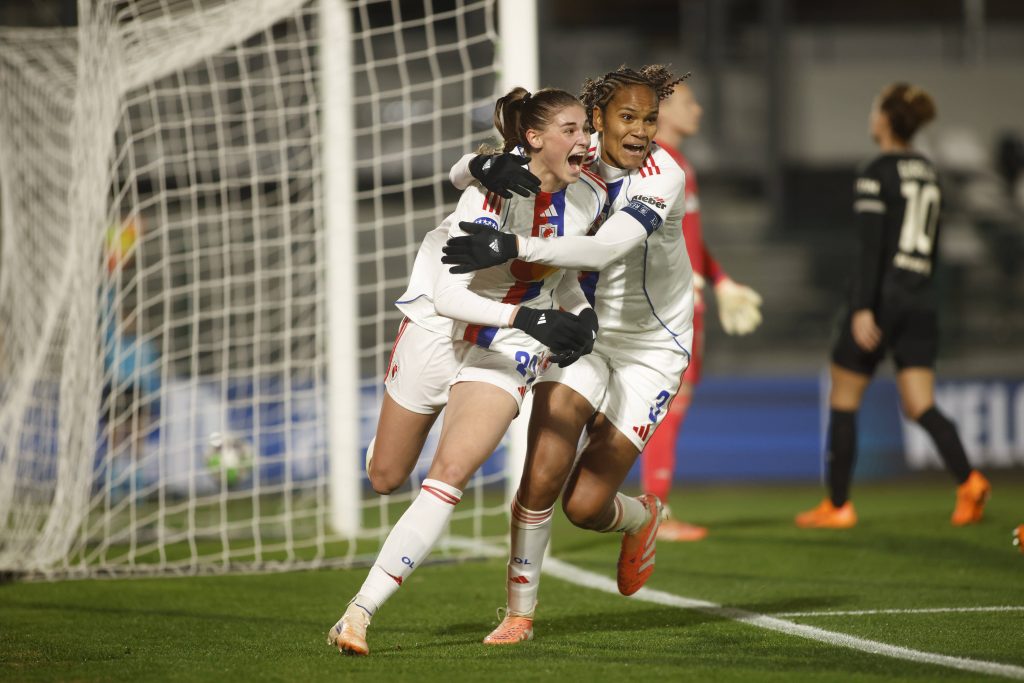
For years, women’s football was written off as a passing fad. That idea is now firmly obsolete. The women’s game has become both a significant force and a clear indicator of where the sport is headed. “The future is women,” FIFA president Gianni Infantino said during the 2019 Women’s World Cup. He wasn’t wrong-and the evidence lies not only on the pitch but in the financial figures as well.
Europe’s top clubs have demonstrated that putting money into the women’s game delivers returns. Olympique Lyonnais, Barcelona and Chelsea were the first to prove that building star-studded squads drives full stadiums, major sponsorship deals and, ultimately, solid financial results. The question is: how did this shift happen?
Lyon: The Blueprint for Success
The story begins in Lyon. The club’s women’s side dates back to 1970, though it wasn’t formally integrated into Olympique Lyonnais until 2004. From that moment, the path was clear: professionalization was the key to success.
Unlike many rivals, Lyon built sustainably. Investments covered the squad, the academy, and the broader sporting infrastructure. The payoff was dominance – first in France, then across Europe. Their sustained success elevated the brand, attracting fans and sponsors alike. Renault was among the first to recognize the potential, signing on in the early 2000s with shirt sponsorships and wider activations. Lyon became more than a football team – they became a commercial entity.
In May 2023, OL Groupe took the next step by partnering with American businesswoman Michèle Kang to establish a multi-club women’s football organization. Less than a year later, in February 2024, Kang acquired a 52.91% majority stake in Olympique Lyonnais Féminin through her investment company, YMK Holdings.
The move marked a new era. Lyon joined a global network linking the Washington Spirit in the US and London City Lionesses in England. Since then, each club retains its identity and community while sharing sponsors, academy structures, and commercial channels. The result is clear: greater reach, lower costs, and a stronger global footprint.
Barcelona: Following the Model, Perfecting the Machine
Barcelona watched Lyon’s rise and saw a model to emulate. With global reach and name recognition, Barça’s entry into women’s football carried huge potential – but it was commitment, not reputation, that delivered results.
Founded in 1970 and formally integrated in 2002, the women’s team remained marginal until 2015, when the board finally professionalized the squad. International signings, upgraded facilities and patient investment laid the foundations. By 2018, commercial deals such as Stanley Black & Decker’s landmark shirt sponsorship legitimized the project. Success soon followed: three Champions League titles, five Ballon d’Ors, domestic dominance and record crowds of 90,000 at Camp Nou. Sponsors from Bimbo to Vueling joined, while La Masia’s extension to women’s football created a pipeline of talent and revenue.
By 2024/25, Barça Femení posted €21.69m in revenue and a €2.01m profit – the club’s only profitable section. “The women’s team is a pillar of FC Barcelona,” said president Joan Laporta. Yet Spanish regulations mean losses on the men’s side still ripple through, a reminder that even success cannot fully escape the wider institution.
Chelsea: Creating new rules
Chelsea, however, managed to escape the very trap that still constrains Barcelona. While Spanish regulations force Barça Femení to absorb the financial turbulence of the men’s side, Chelsea broke free from that structural limitation. In 2024, the club transferred its women’s team to the Clearlake–Boehly investment consortium – a deal that valued the WSL champions at around $200 million.
The move eased pressure on Chelsea’s men’s side, which posted losses of £128.4m in 2023/24, but it was no fire-sale. The women’s team had been decades in the making: founded in 1992, integrated in 2004, and transformed under Emma Hayes from 2012. Increased budgets, ambitious signings and world-class facilities turned Chelsea into England’s dominant force, with WSL titles, FA Cups and a Champions League final. Success on the pitch drove success off it. Rising attendances and broadcast deals made Chelsea Women one of Europe’s most valuable football properties. Separation from the men’s team accelerated that growth, with sponsorships tailored to the women’s brand – from Singer Capital Markets to Constant Contact, and in 2025, Alexis Ohanian’s landmark investment.
It may signal the future: Lyon and Chelsea now operate independently, yet all three
pioneers proved early that investing in the women’s game delivers returns.