With social media now acting as a key driver of fan engagement, club visibility, and commercial growth, it’s becoming an essential metric in assessing the global development of the women’s game. Comparing digital reach across leagues offers valuable insight into how clubs are connecting with audiences and where gaps still remain.
WSL and Liga F Lead the Pack in Digital Reach
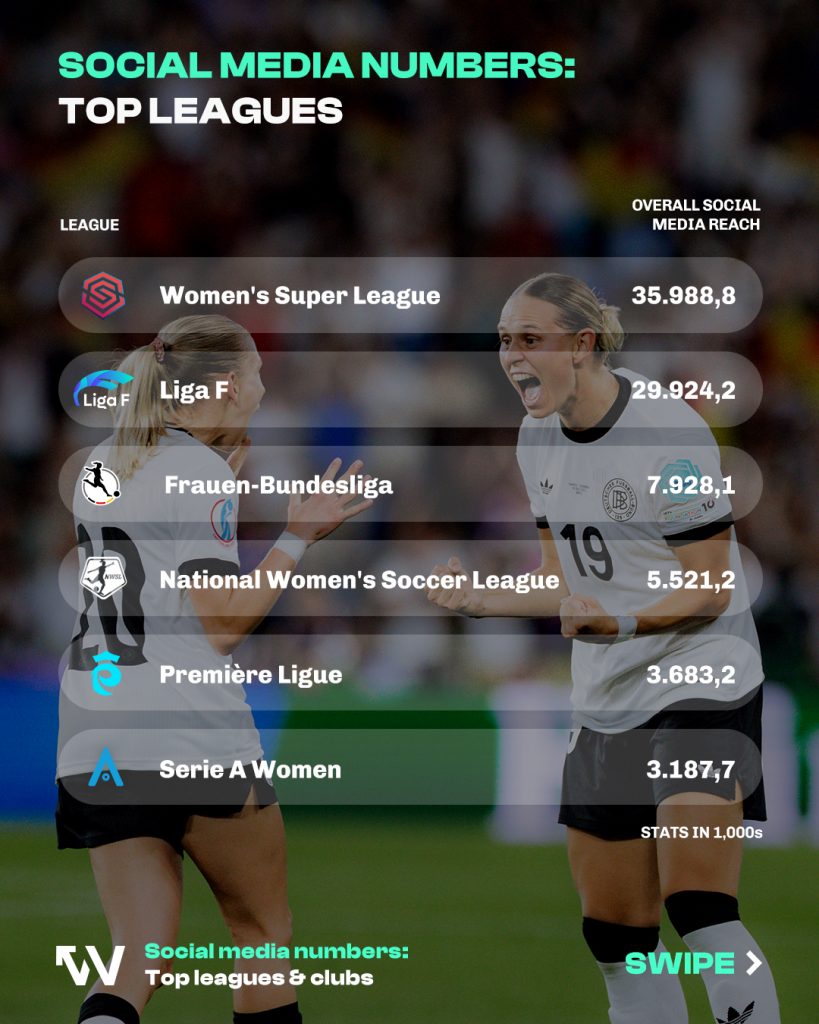
When comparing total follower counts across five major platforms – Instagram, Facebook, TikTok, X (formerly Twitter) and YouTube – England’s Women’s Super League (WSL) emerges as the frontrunner, with a combined reach of nearly 36 million followers. Close behind is Spain’s Liga F, with approximately 30 million.
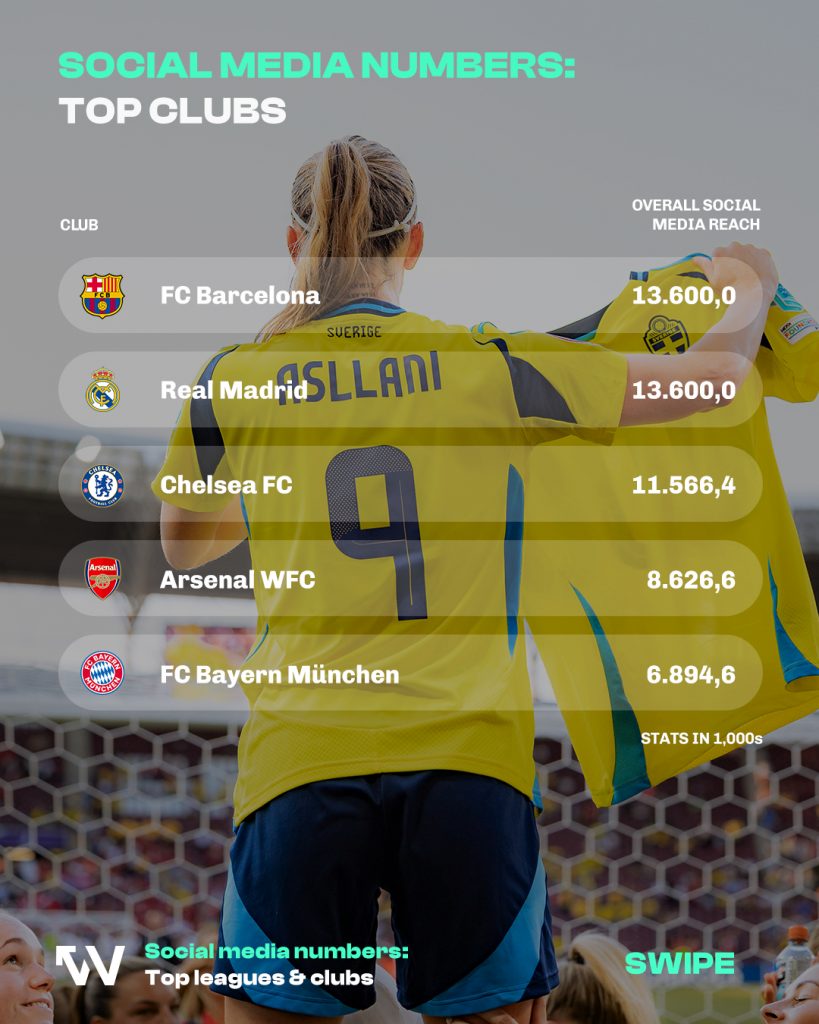
The WSL benefits from a relatively balanced distribution of followers across multiple clubs. Chelsea (11.5 million) and Arsenal (8.6 million) are among the league’s top performers with some other clubs reaching similar high numbers. In contrast, Liga F’s digital landscape is dominated by two giants: FC Barcelona and Real Madrid, who together account for a significant portion of the league’s total reach, each with around 13.6 million followers. Atlético Madrid is the only other Spanish club keeping pace to some extent, while the rest trail far behind.
Germany’s Frauen-Bundesliga tells a similar story with their 6.9 million total followers. FC Bayern Munich commands nearly 90% of the league’s total 7.9 million followers, leaving little digital space for other clubs.
In contrast, the U.S.-based National Women’s Soccer League (NWSL) across the Atlantic presents one of the most evenly distributed social media ecosystems, with an overall following of 5.5 million. Here, no single club holds a disproportionate share, a reflection of the league’s structure as women-only franchises without affiliated men’s teams. This autonomy may be contributing to a more consistent online presence across clubs.
Following fifth and sixth place, France’s Première Ligue and Italy’s Serie A Women fit right into the overall European league picture with a few prominent teams such as OL Lyonnes and Juventus dominating, while many others remain largely invisible online.
Note: The following numbers were retrieved in August 2025.
Missed Moments: Clubs Still Overlooking the Power of Platforms like TikTok
In the broader conversation about growing women’s football, visibility is key. And in today’s media landscape, that often starts with social media. Viral moments on platforms like TikTok and Instagram can boost awareness, attract new fans, and even drive interest in ticket sales and broadcast deals.
However, not all clubs have embraced this potential. Some still lack dedicated social media accounts for their women’s teams, instead relying on shared channels with their men’s sides. This approach can be limiting, especially when the audiences for men’s and women’s football diverge. Clubs like Inter Milan, Lazio, and UD Sassuolo in Italy, Montpellier in France, and SD Eibar and CD Tenerife in Spain exemplify this issue missing out on opportunities for tailored engagement and broader exposure.
It’s unsurprising that clubs with strong men’s teams often benefit from larger followings. Success on the pitch and the popularity of individual players also drive engagement, as seen with stars like Swiss international Alisha Lehmann.
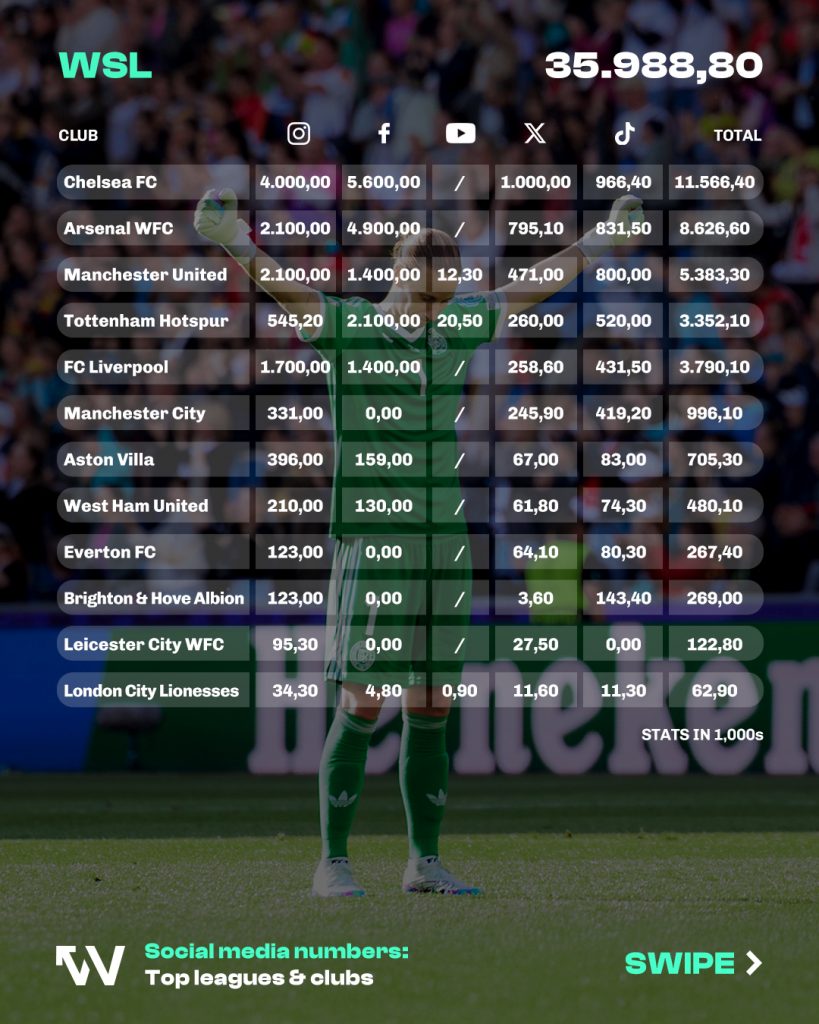
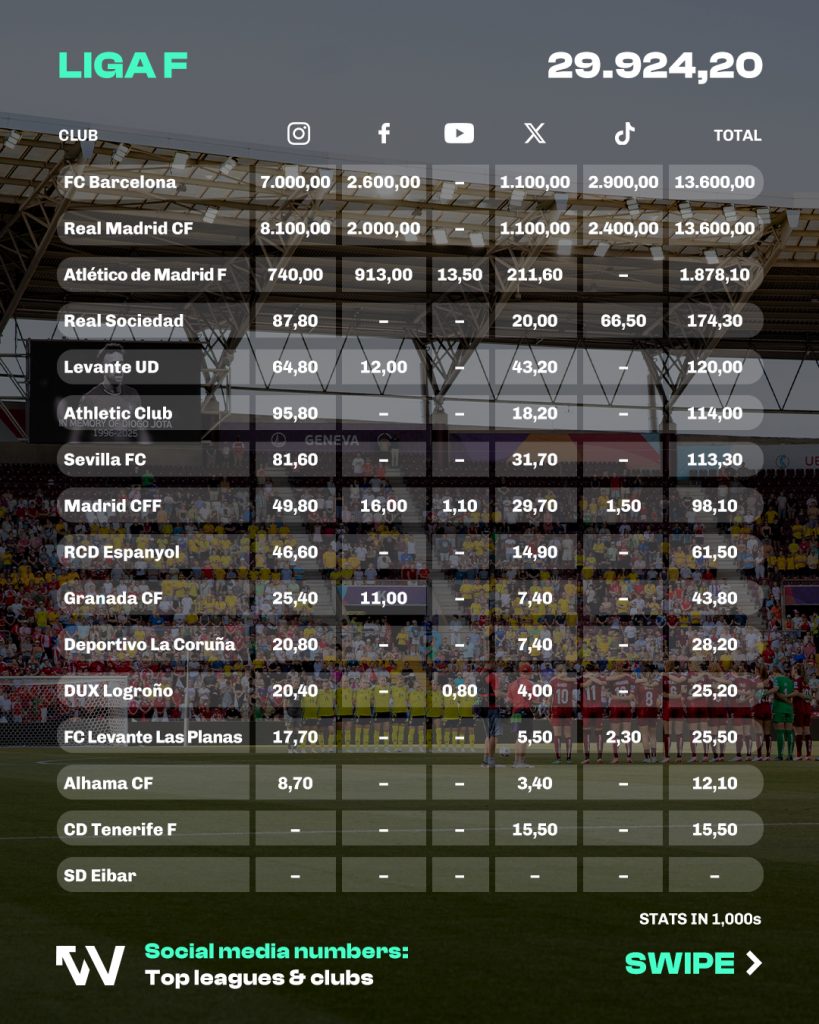
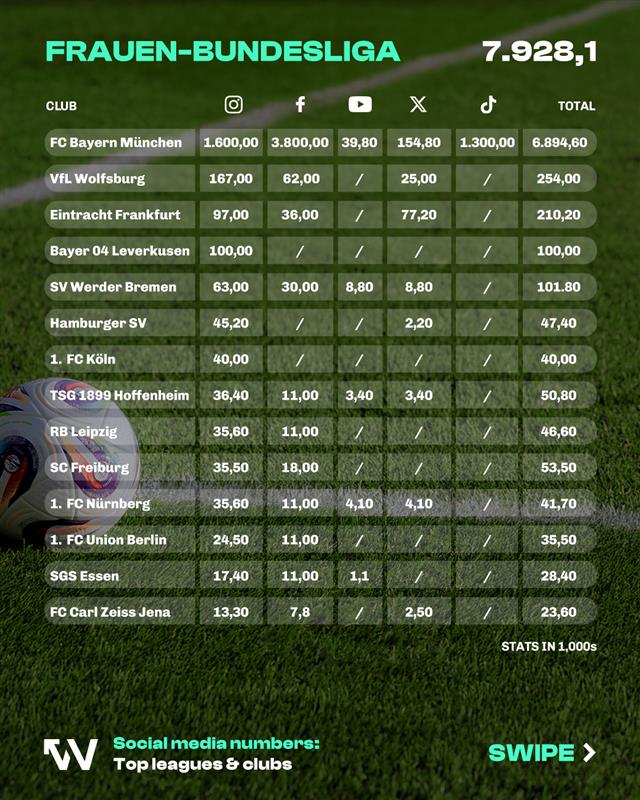
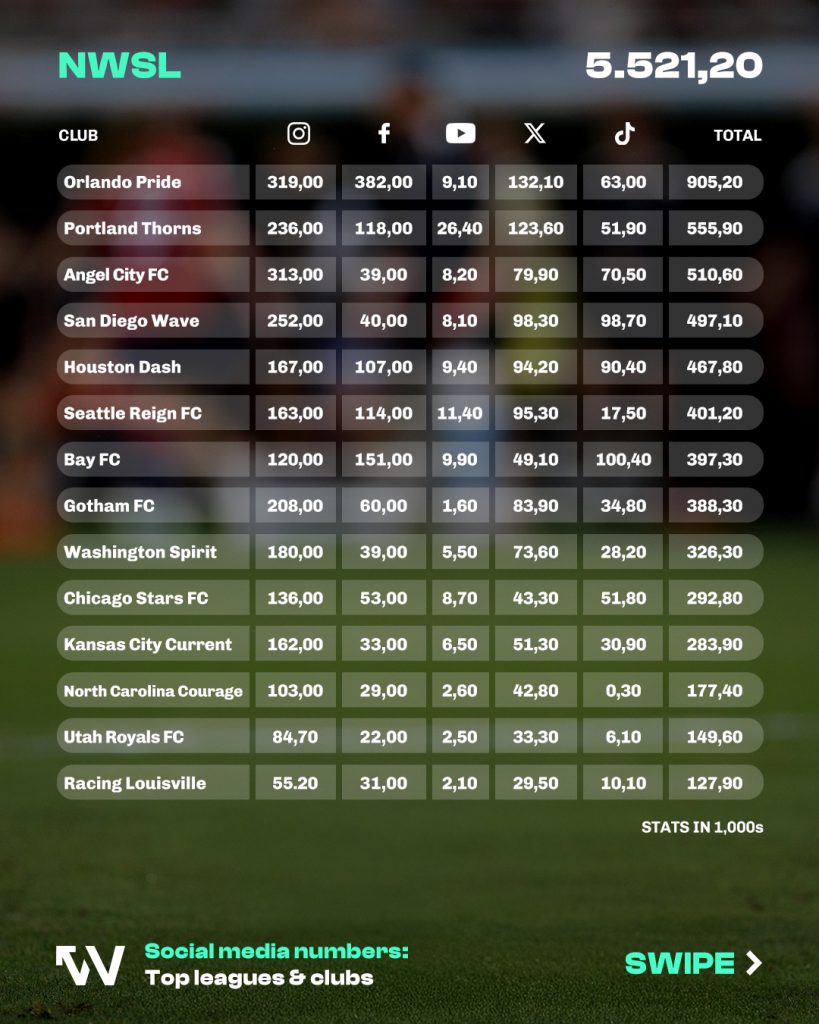
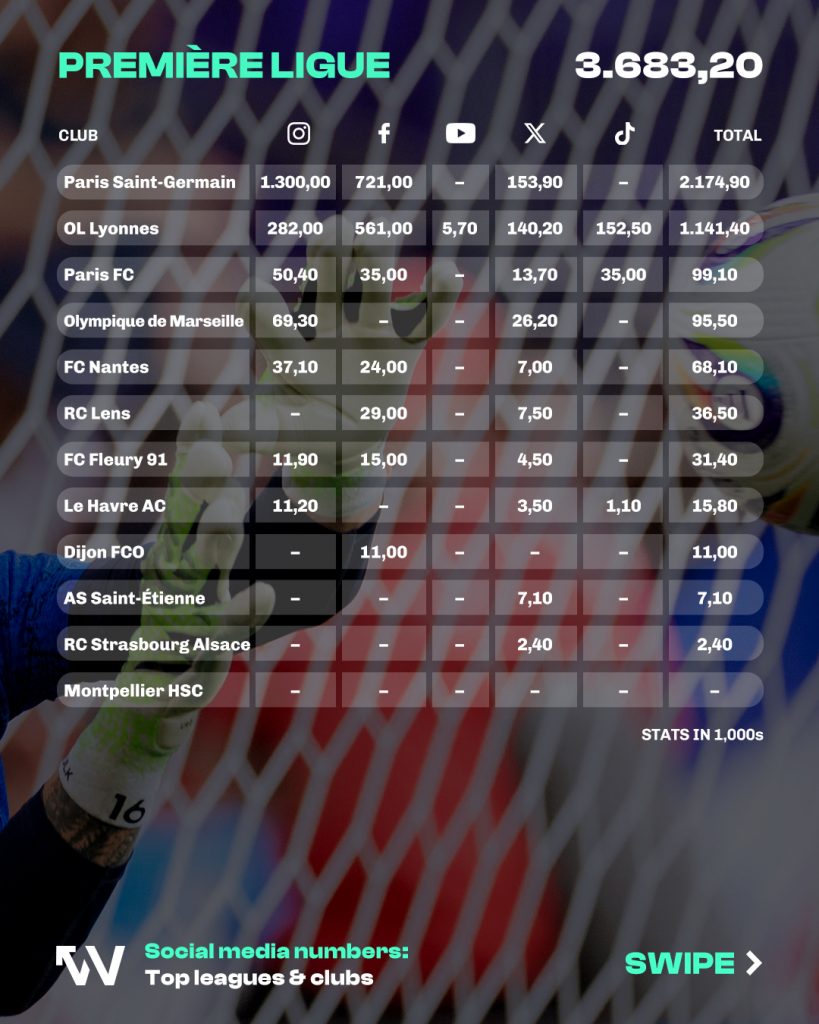
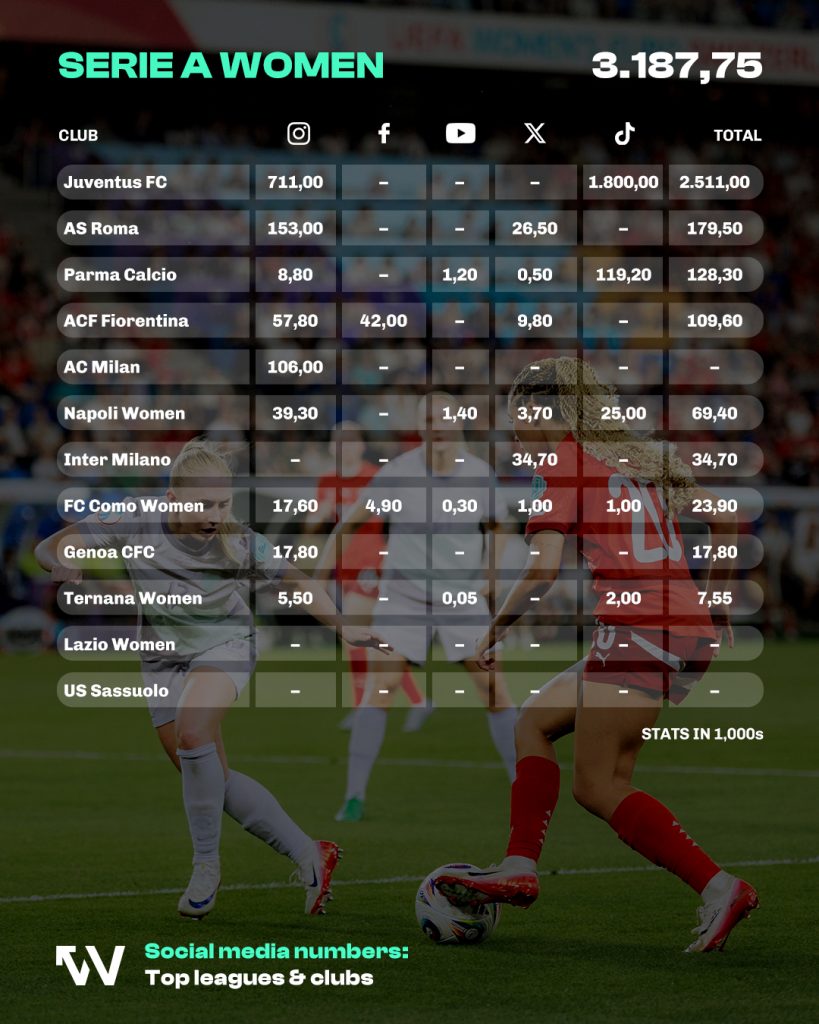
Note: The following numbers were retrieved in August 2025 with figures being given in units of 1000.
The Visibility Gap: Shared Accounts, Missed Opportunities
Yet, while most NWSL and WSL clubs operate their own accounts across key platforms, there’s still untapped potential in the other leagues. In the Frauen-Bundesliga, for example, TikTok remains notably underused, despite its proven power in capturing younger audiences and driving virality. Only Bayern Munich feature an account dedicated to their women’s team while others rely on sharing with the men’s side.
One of the primary reasons for this underutilization is a lack of investment. Many smaller clubs lack the resources or staff to manage consistent social media strategies across multiple platforms. Often, digital roles are filled by interns or junior staff, limiting the capacity for strategic growth. Elevating the importance of social media within club operations and assigning experienced professionals or bringing fresh ideas to the table to lead those efforts could be a crucial step forward.
Unlocking Potential: What Comes Next for Women’s Football Online
Ultimately, social media is more than just a marketing tool. It’s a gateway to broader visibility, larger audiences, and increased commercial opportunities. As the women’s game continues to grow, clubs that recognize and invest in their digital presence are likely to reap the rewards both on and off the pitch.
As women’s football continues to gain momentum, a strong and strategic social media presence will be essential for clubs looking to grow their fan base, attract sponsors, and boost visibility. The digital playing field is far from level but for those ready to invest, the opportunity is wide open.
Text: Adriana Wehrens